(An excerpt from The Treasure Hunt)
The Treasure Hunt
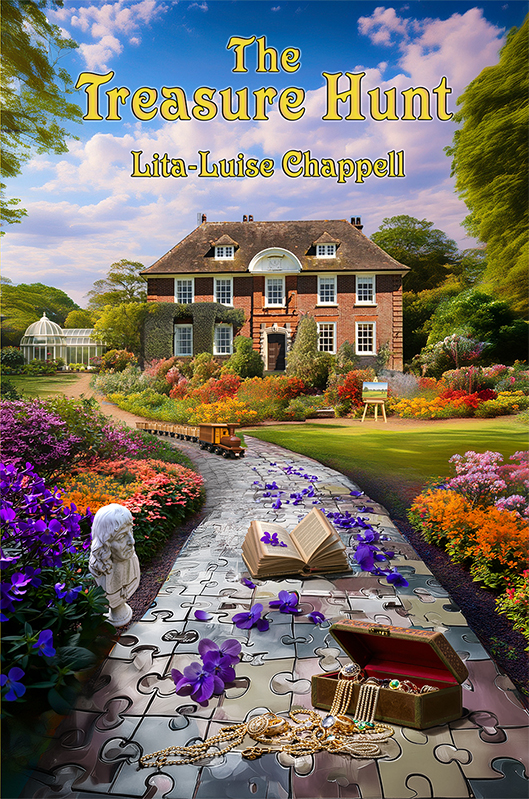
“Isn’t this a pretty one of a lovely English garden.” She set the box down. “Alfred, why do you like puzzles so much?”
“Lots of reasons, really. Mostly because they help me to think.”
In the last two years, no one had ever asked him why he chose puzzles to work with. But it took one curious set of eyes to finally prevail.
“They help you to think about what?” she asked.
Alfred took a deep breath before he began. “Solving criminal cases. It’s a metaphor for me. That puzzle has one thousand pieces, which is the size I prefer. Let us pretend that I have not seen the picture of that puzzle. Each piece that I pick up is a part of the picture, but without knowing what the picture is, the entirety of the image is a mystery to me that needs to be solved, piece by piece.
“After the puzzle pieces are emptied out of the box, some people start by separating the pieces into different piles of the same color, or by object, then proceed to fit those pieces together first. Then they attach the different clusters together and eventually find the connecting pieces between them. Others separate out all the straight edges first, linking each border piece until a square or window to the picture is formed.
“I do both. I take handfuls of pieces from the box and carefully go through them to pull out the straight edges first. At the same time, I turn any upside-down pieces picture-side up and push them to the side. Then I line them up by color and create clusters of interlocking pieces. One would think that all the straight edges would be easily found right away, but try as I might, I always miss at least one. Sometimes, when I assemble the border, I still might get them in the wrong place.”
“But if you are going piece by piece, how can you miss a straight piece?”
“The same way the police might misunderstand a clue and link what they learn to the wrong person or event. So, what does that tell you?”
Jason weighed in. “That you are not paying close enough attention?”
“Maybe, but ultimately, it is simply because we are human. We make mistakes even when we are paying attention. That is why news sources must confirm a fact before they report it. Legitimate ones, anyway.
“For me those straight edges represent the boundaries within which I work to solve a crime. They are the known facts. Those puzzle corners may be the boundaries of the city: north, east, south, and west. The different figures or objects in the puzzle might represent various people involved in the crime. The colors around them are the various descriptions and characteristics that a clue reveals, or that the police learn about. Sometimes, by connecting long lines in the picture, or building up certain shapes or unifying aspects like clusters in a puzzle, I understand better how a person contributed to the crime, why they were there, or what they did. Every piece is a clue.
“Some people like to see how fast they can put a puzzle together. That’s where puzzles and crimes differ. Working fast to complete a puzzle defeats the whole reason for doing one. Like police who jump to the wrong conclusion trying to quickly find a guilty party. Puzzles are meant to be a pastime. Solving a puzzle is not a race. If a person rushes a puzzle, they only become frustrated. If the police rush too quickly to solve a case, then they might ignore a clue, misunderstand a motive, and too often accuse the wrong person. Both the rapid puzzler, and the police who are working to solve a mystery, must subdue their egos.
“There’s more. All puzzle pieces have hooks and knobs, or as some people call them, ‘outies’ and ‘innies.’ Sometimes when I have a particularly large part of a puzzle that is the same color, I sort by the hooks and knobs. I make a row of one knob and three hooks, then opposing knobs and opposing hooks, then two knobs followed by two hooks, followed by three knobs and one hook, and last, a row of those that have four knobs and no hooks. That way, if I have a space surrounded by other pieces of the same color, I need only to look for the piece that has the right knobs and hooks.
“There are always motives to a crime. The knobs are the reasons why someone would act a certain way. You’ll notice that every piece has at least one knob. That means that everyone in a crime can have a motive for their actions, no matter what they say or claim. Only by looking at the circumstances surrounding them will I be able to tell if that motive is a contributing factor, or if a person is lying. Each new clue that I discover is like adding another piece to the picture of the crime. That’s why I enjoy puzzles. They help me to understand and eventually see what the entire mystery is. The more pieces that fit, the closer I get to solving the mystery. I spent long hours getting to understand and enjoy puzzles as a child.”
Gia sat in surprise and shared a glance with Jason. “I never realized one could equate one with the other. Have you solved a lot of crimes using this method?”
“Most. Sometimes it’s just basic police work with obvious leads and answers. Since becoming a consultant, more so.”
Jason grinned. “One can hardly say that you have retired, Alfred. Your mind is as sharp as ever and you keep on solving crimes.”
“That may be true. And as long as I have you, Gia, and Ulima to act as my legs and additional eyes, along with Chester to do the legal digging, we make a great team. Even though you are not of my blood, you two and Ulima are the family I never had, and I will be eternally thankful.”
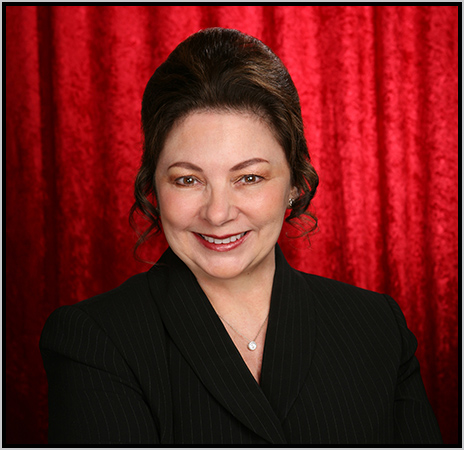 The official website of Lita-Luise Chappell, writer on sex, magic, food, distant lands, and everyday life with articles, poetry, novels, travelogues, rituals, cookbooks, and short-stories.