Tuesday, May 20
We had breakfast and left by 9:30 to arrive at the Grotto de Rouffignac at the requested twenty-minutes before our entry at 10:15. This would be another electric train into a cave, to visit more prehistoric animal paintings.
This cave located in Perigord is in the commune of Rouffignac-Saint-Cernin-de-Reihac. The cave contains more than 250 engravings and line drawings dating from the Upper Paleolithic Magalenian period (13,000 years old). The cavern itself, is about five miles long, and is one of the largest decorated caves in Europe, showing 158 mammoths, woolly rhinoceroses, bison, horses and ibex. It was first documented in 1575 by Francois de Belleforest, and others through the 17th century, and it is mentioned in several books. The cave was mapped in the middle of the 18th century by Gabriel Bouquier; and was opened up to visitors in 1959, along with the train. The site was classified a UNESCO world Heritage Site in 1979. It is a dry cave with three levels, but the train only goes to the best art found on the top level, with engravings and black line drawings.
We were not allowed to take pictures inside, but we did get one picture of the entry. If you would like to see some of the artwork that prehistoric man produced in this cave, you can see them by searching online for “images inside the Rouffignac cave”.
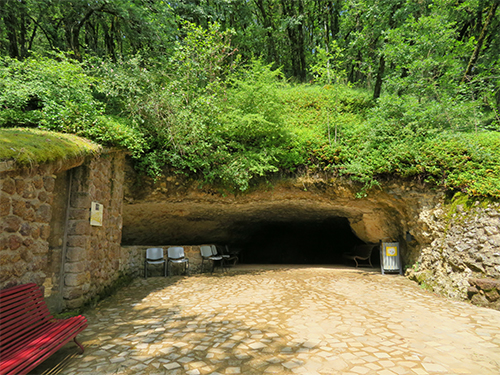
Our tour began when our English-speaking guide opened the gate and let us in. We rounded a corner and got on an open electric train. He gave an intro while the narrow train slowly got on its way, of which most of it was only lit by the front of the train. He paused in one spot to show where there was evidence of bears having inhabited the cave. Their vertical claw marks were made to mark their scent, as bears have scent glands in their feet. Then he showed us rounded out hollows in large boulders, where bears had slept, hibernating through winter. The bears were gone by the time man had entered the cave.
Further along, our guide stopped the train, we got out and followed him to an area where he illuminated with a flashlight, the first drawings. They were of bison outlined in a black mineral that showed up well against the white wall. Further on he stopped again, and showed us ten mammoth illustrations all in a row, as if they were on some migration. At one point, the train double-backed and went into another channel of the cave. At the end we got out, and there was an area where the upper part of the walls and the ceiling were covered with drawings and etchings of bison, horses, and ibex. Some were small and others quite large, and some were drawn over other animals. One drawing showed bison with their horns locked in combat. There was an amazing partial outline of the front of a horse’s head. With only a few artist’s strokes, it was easily recognizable. On one rocky facing, we saw a hole that opened to a lower level, where more art had been found.
Then it was back on the train to the end of the tunnel, where we got out again, and were able to see a few photographs of the lower-level art. This was a curious combination of three animals, bison with mammoth, with a human head in the middle. Many theories abound as to their meaning, and no one knows for sure, but wherever there was an entrance to a lower cave, more art was drawn there. Vere thought the magical drawings were ancient signposts, there to warn others that it was where animals came up from. My theory, was that it showed that if surrounded by animals, here was a place to hide. But who knows what it really means.
There was also a part of the cave, with additional information and a few recreated parts of the art images that were found in the lower area. Also, a portion of the red clay roof, where artists had etched into the clay to the sandstone below, to show a white outline. This process had been used to draw the largest bison in the cave. Some animals faced one way and some the other, as if they were surrounded or protecting themselves. There was also a board that showed a sample picture of a woolly mammoth that had been drawn over by human graffiti, and then how a team of workers were able to remove the graffiti, so the original animal form could be seen.
That was the end of the tour, and then we went to the gift stand, where Vere bought the book describing the art within the cave, and a small green statue of a prehistoric goddess image, and I bought a small wooden puzzle of a woolly mammoth.
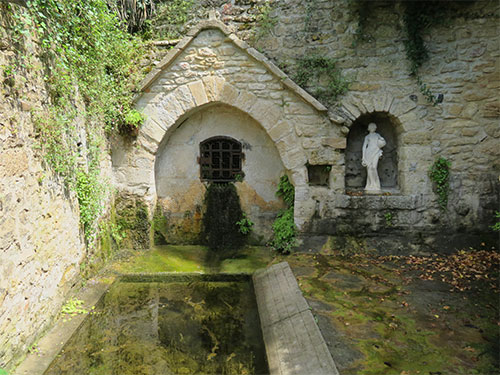
We were headed to our next stop, when we saw a sign saying, “Medieval Garden,” driving through the small town of Plazac. We pulled over, got out, and followed the signs. First, we came to an alley that had water spilling out from a wall and into a small blackened pool. A sign identified it as the Fountain of Monaco and explained its history. It was originally the only potable water source for the small village. Later, it became a landmark for Alsatian refugees, who were under protection of the Prince of Monaco, and the village housed them from 1939 to 1940.
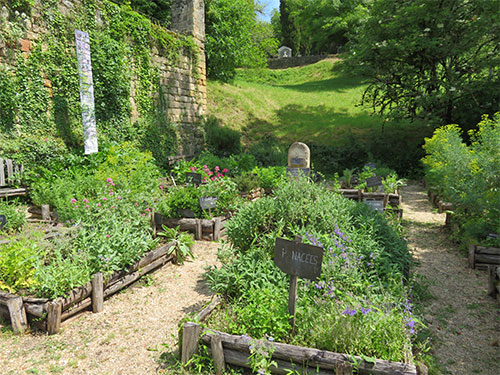
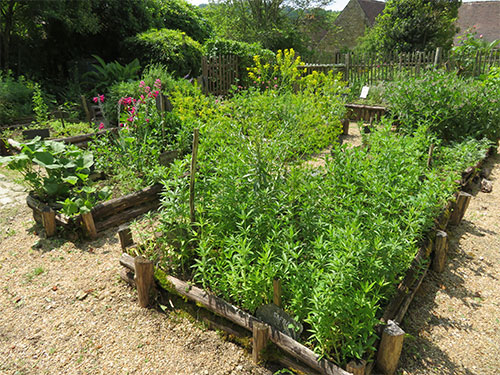
Further on, we found the Medieval Garden behind a wooden fence. We entered to find small subplots holding different kinds of herbs. Some were medicinal, some culinary, others aromatic, and one sign read magical herbs. In the Middle Ages, the garden played an essential role in the spiritual life of the monastery. There was a total of seventy-three herbs, sixteen fruit trees, three textile plants, and two plants used for dyeing cloth.
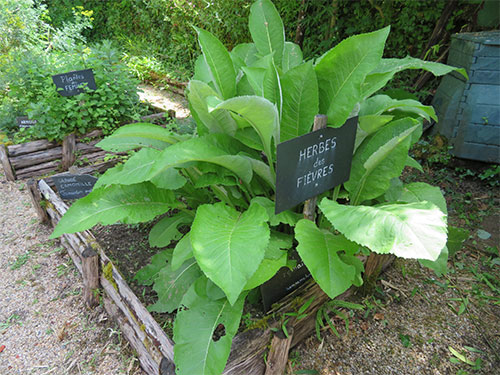
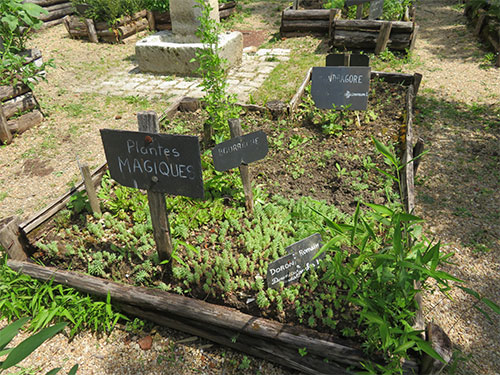
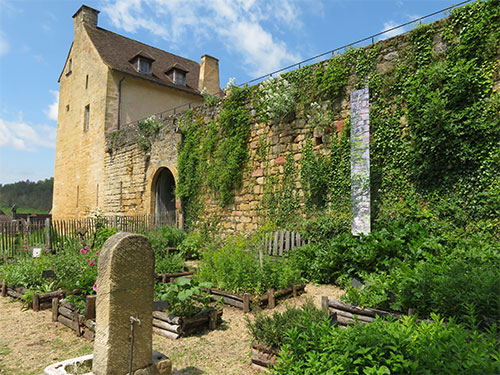
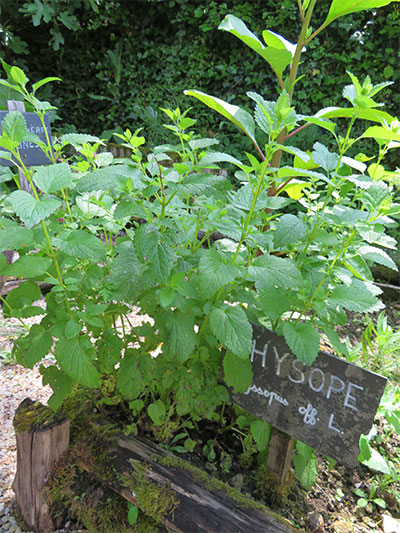
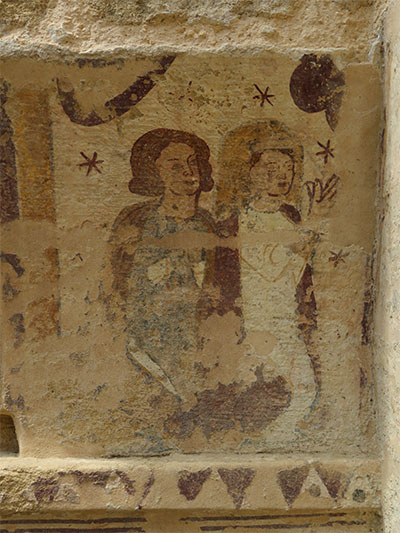
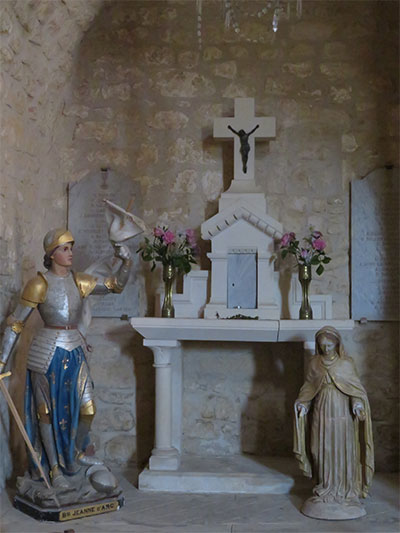
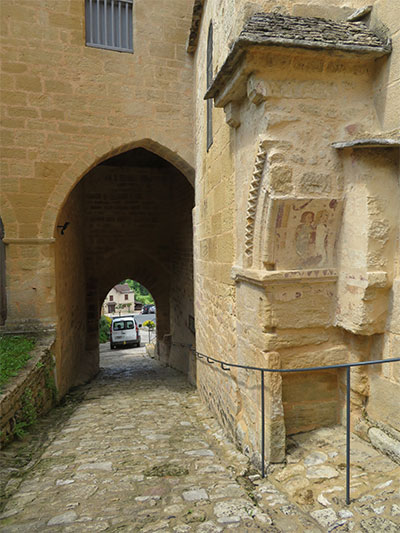
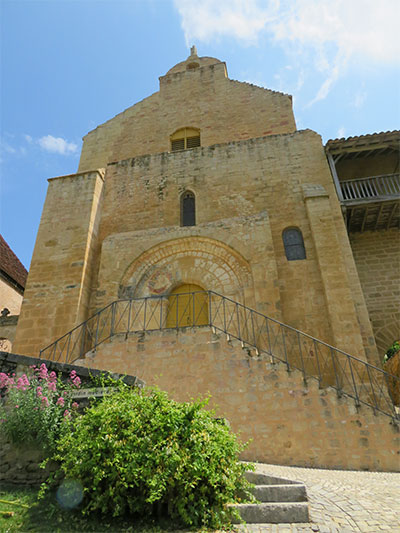
Beyond the garden, was a path that led to a church. The side door was open, but looking in, it appeared that the high altar was under construction. The walls to either side of the entry still had traces of an old fresco. Inside was an altar with Joan de Arc, honoring the “Children of Plazac, Dead for France.” Then we walked the cobbled archway to see the front of the church.
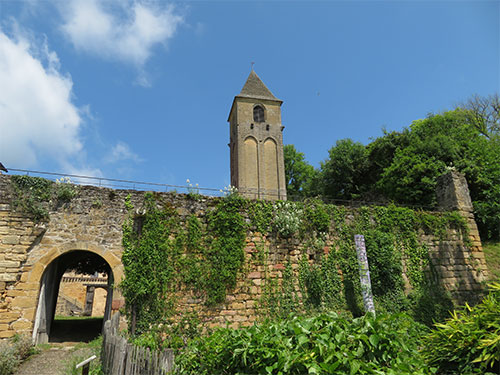
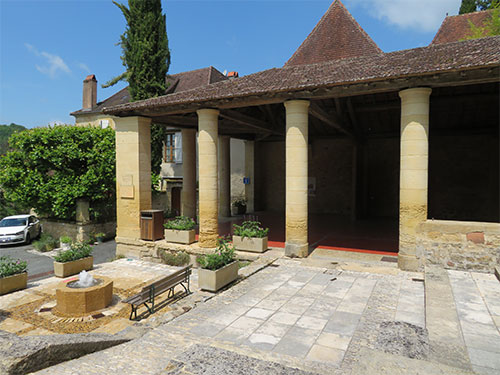
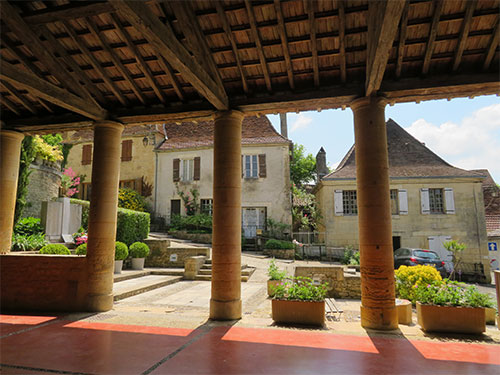
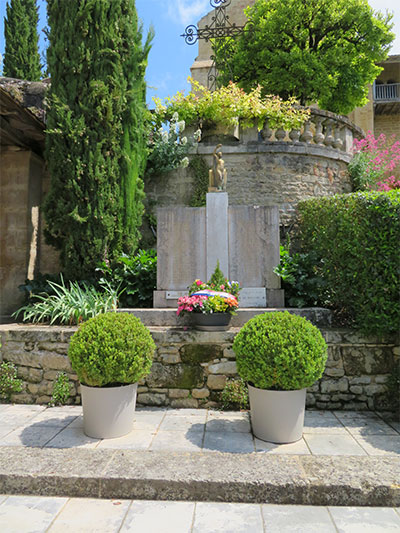
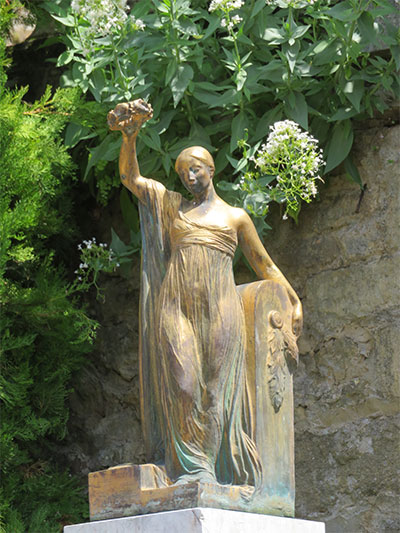
On a lower level, we found a small area called the “Square of Resistance,” and “The Hall,” with a sign that described why it was there. In 1652, two houses had once stood there, but were burned down. In 1832, Mr. Dubois, the owner of the nearby Chaban castle, had the open hall built next to where the nut market once stood, for community meetings and events. Right next to it was a war memorial with a lovely bronze statue of a woman on a pedestal and a bubbling fountain before her.
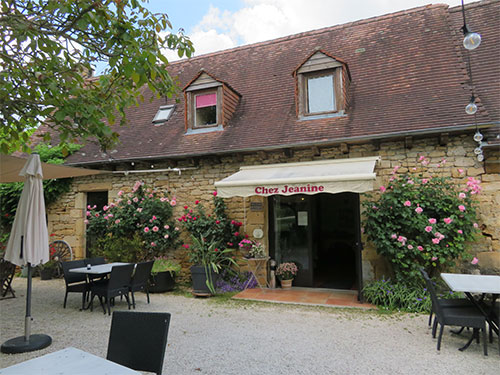
Vere wanted to try out a nearby restaurant, Chez Janine, twenty minutes away, near the village of Sergeac. It was an old home with a large shaded patio out front. A black and white dog came out to greet us and we were seated by the owner’s wife, inside. Vere had the veal with mushrooms and potatoes, and I had my usual, Chevre Chaud, hot melted goat’s cheese over toast on a salad. This one had slices of dried duck, which I gave to Vere, and it differed with cucumbers and strawberries. The dog visited us at the table and then saw us out the front door when we were leaving.
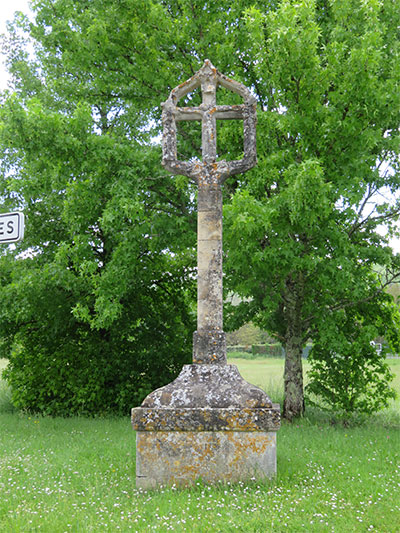
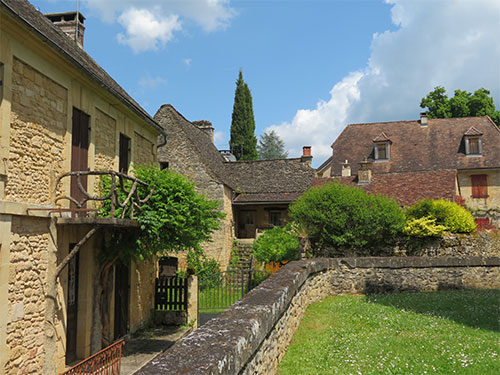
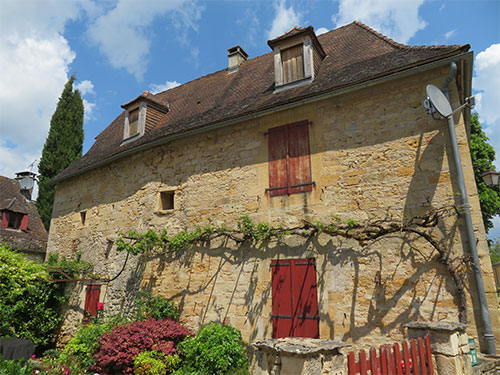
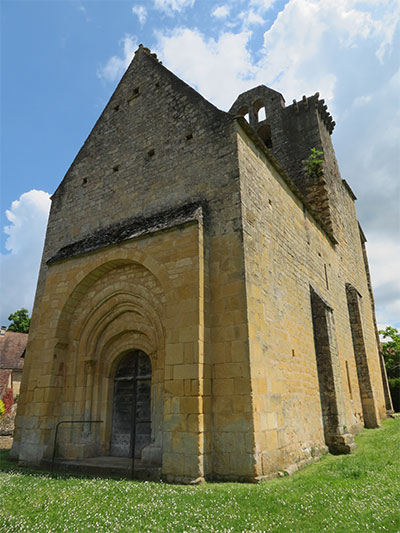
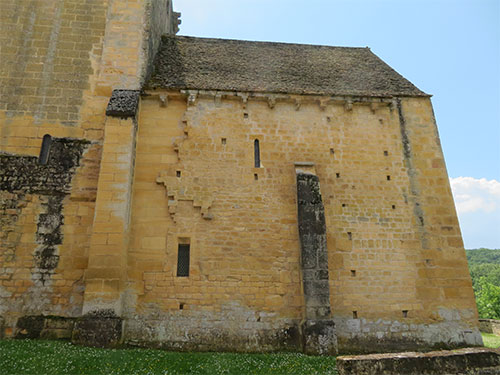
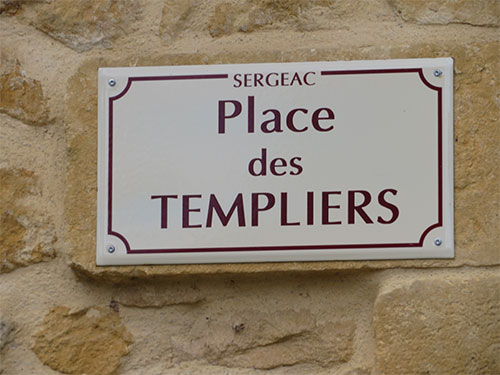
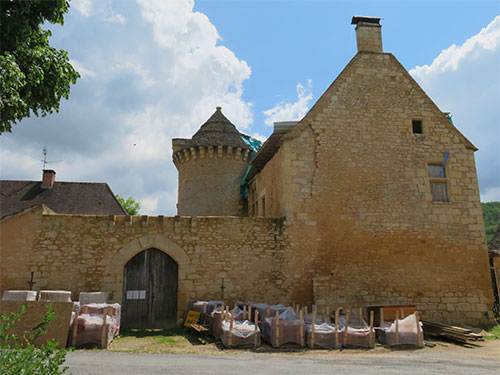
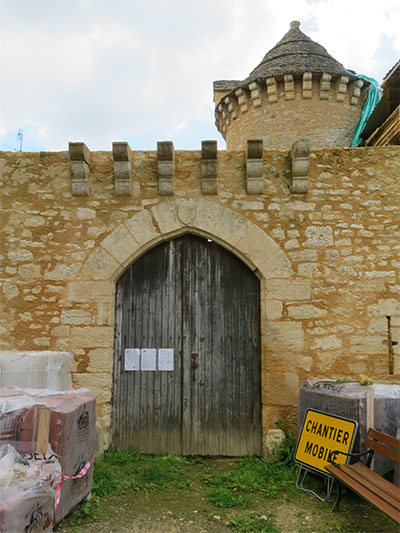
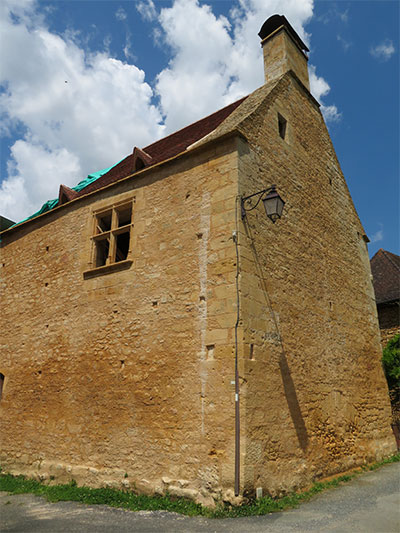
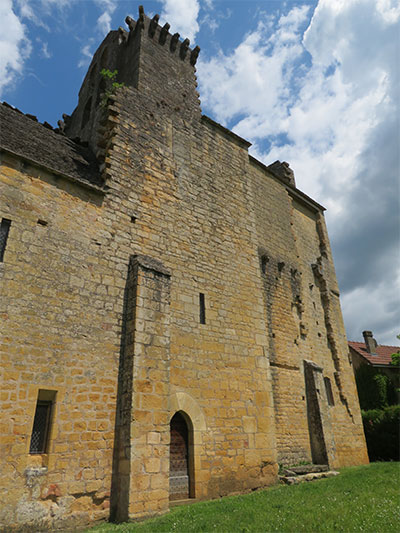
Just a street away, we came to the tiny village of Sergeac, where there was once a Templar Commandry. The building was getting rebuilt and was not open, but Vere parked the car and got out to walk around and take pictures. He could peak through slanted boards, which showed an empty interior. There was also a nearby church, but it was closed. We walked around it, through yellow and white wild flowers. Then I sat for a while, watching tiny sparrows, flit across roof tops, while Vere took more pictures.
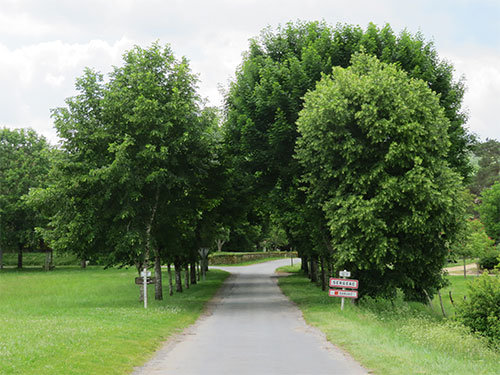
It was back to Le Clos Vallis B&B along the winding road. We rested and then set up our laptops in the dining room and wrote for a couple of hours until Vere was ready for dinner. We left a little early to walk around old Sarlat for an hour before our restaurant for dinner opened at 6:30. I found French tea towels, and a large bag with a zipper to carry purchased items on to the plane.
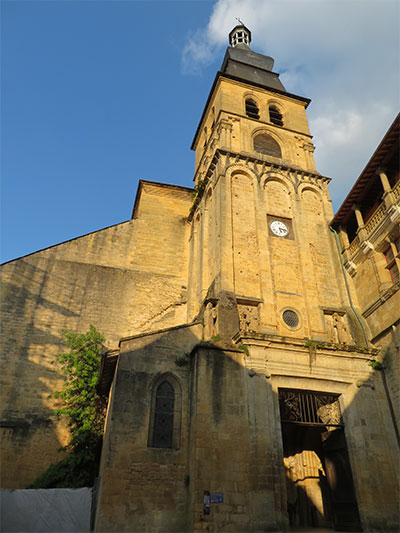
There was also a Roman Catholic church in the central square, dedicated to Saint-Sacerdos, who was a French saint born near Sarlat, and who later became a bishop of Limoges. The church was founded in the 9th century, and has both Romanesque and Gothic architecture. It is known for its 12th century stone tower, called Lanternes des Morts (Lantern of the Dead), once a marker for their cemetery. The “See Dordogne” website describes the tower as “linked with the abbot Bernard of Clairvaux, who played a major role in the Second Crusade. It is said to have been built after a visit of the abbot in the city, in 1147, possibly by the Knights Templar.”
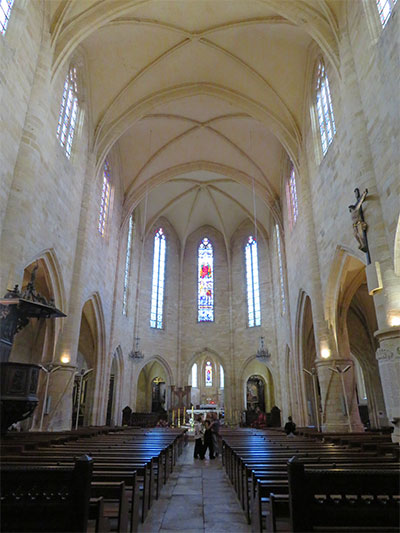
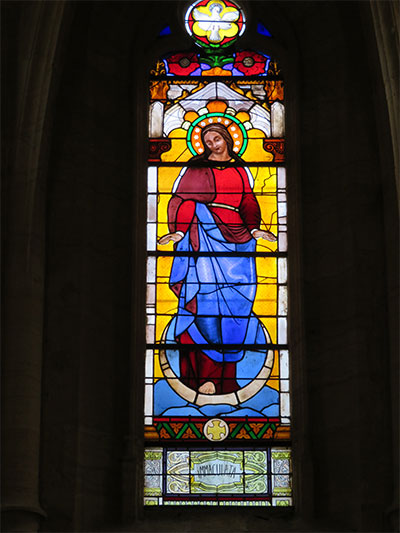
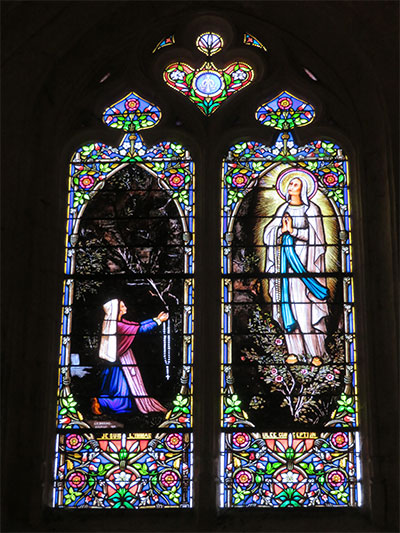
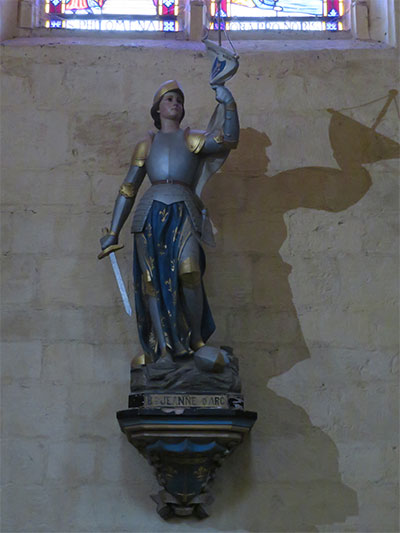
Inside, the ceiling is high and the stone walls are white sandstone. There are also several colorful stained-glass windows, and a statue of Joan of Arc.
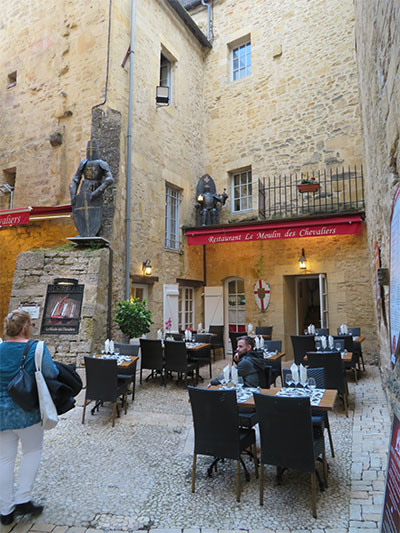
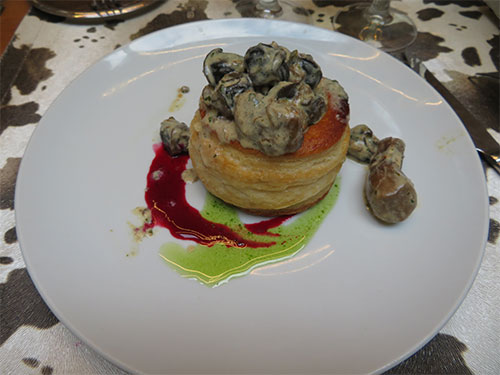
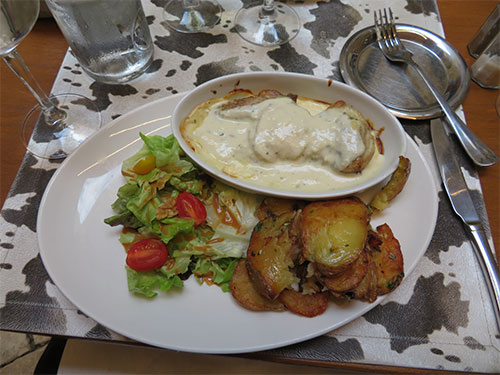
At 6:30, we walked into Le Moulin des Chevaliers (the Knights’ Mill) for dinner. We ordered two glasses of sweet wine, and shared an appetizer of a local melted cheese on toast. Then I had escargot and a mushroom sauce inside a puff pastry for my main, and Vere had Chicken with a Rocamadour cream sauce that came with potatoes and a small salad. We split an apple custard tart with caramel sauce for dessert. Then back to the B&B.
 The official website of Lita-Luise Chappell, writer on sex, magic, food, distant lands, and everyday life with articles, poetry, novels, travelogues, rituals, cookbooks, and short-stories.