Thursday, May 22
After breakfast, we headed for the town of Beynac-et-Cazenac, touted as one of the most picturesque villages in France. As the compound name implies, it is actually two separate ancient towns: Beynac is located eight kilometers SW of Sarlat, and Cazenac is three kilometers further NW of Sarlat (where our B&B was). The Dordogne River flows by both of them.
We were able to drive to the top of the hill where Beynac castle sits, and get the closest parking possible. Then we walked a short distance to the castle to enter. The renowned and well-preserved castle sits high on a limestone plateau well above the town. It was built in the 12th century by the barons of Beynac to block the valley from invaders. When Adhemar de Beynac died, Richard the Lionheart, then King of England, offered Beynac to his roadmaster, Mercadier. But he was assassinated so it reverted to the family and was held by two brothers. During the Hundred Years’ War, it was one of the strongholds of France. The castle has been left intact with a double enclosure, Romanesque keep, a watchtower, spiral staircases, buttresses, crenellated terraces, and apartments have retained their woodwork, some painted ceilings, frescoes, and Renaissance fireplaces.
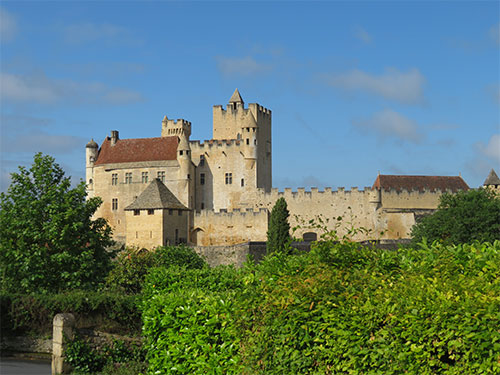
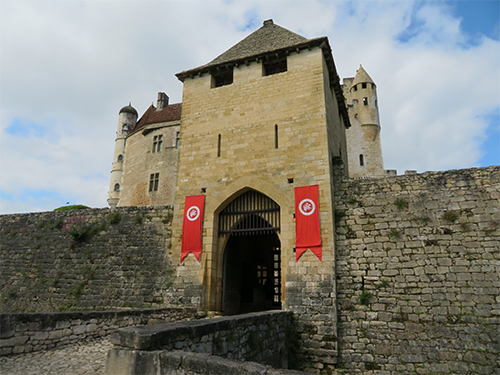
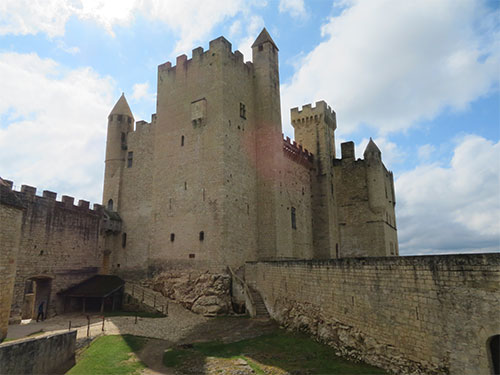
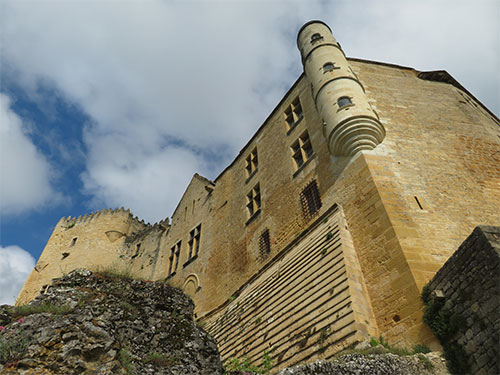
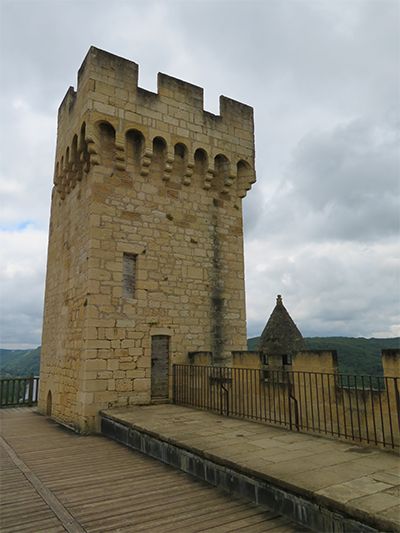
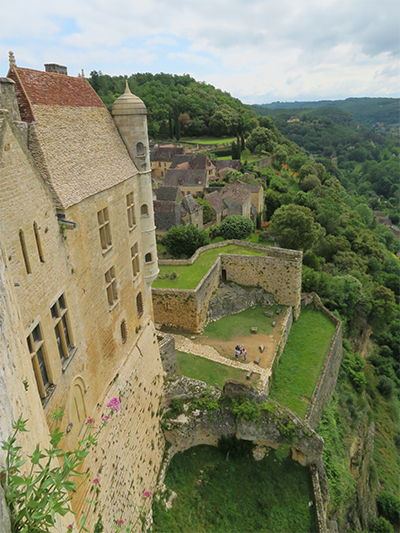
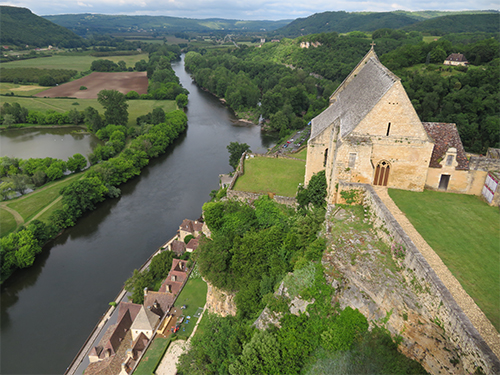
It was a pleasant sunny morning as we walked toward the castle, and red banners welcomed us at the entry. We entered the castle courtyard and proceeded to climb, its buildings towering above us. At the top was a rooftop terrace, which allowed us to look down upon the different levels of the castle grounds, the village beyond, a closeup view of the roofing structure, and the Dordogne River with large tour boats going by.
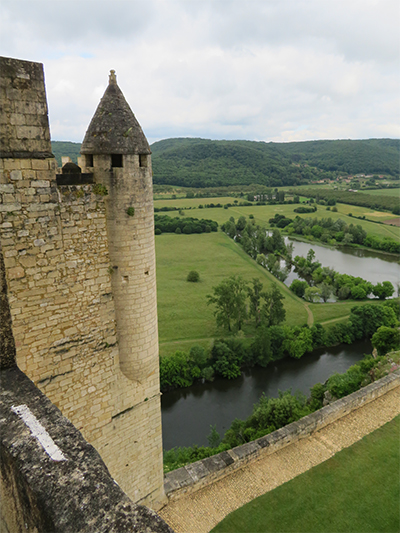
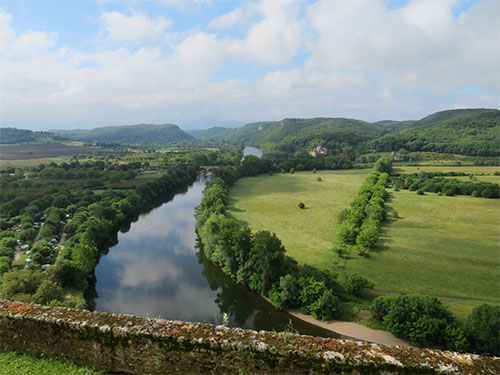
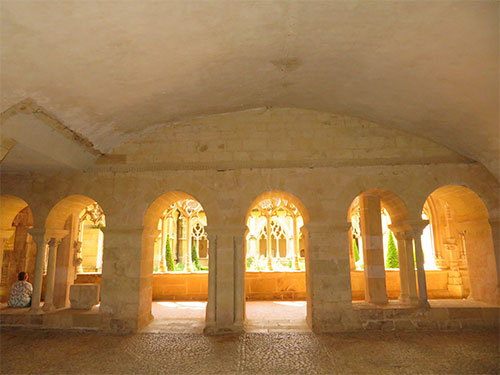
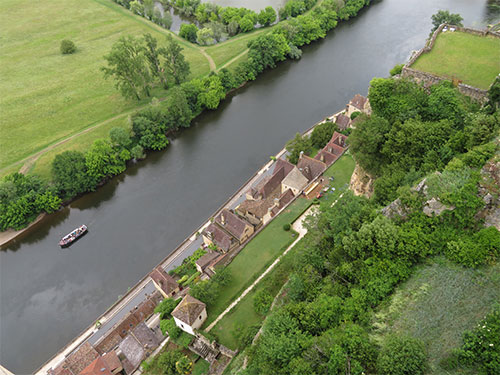
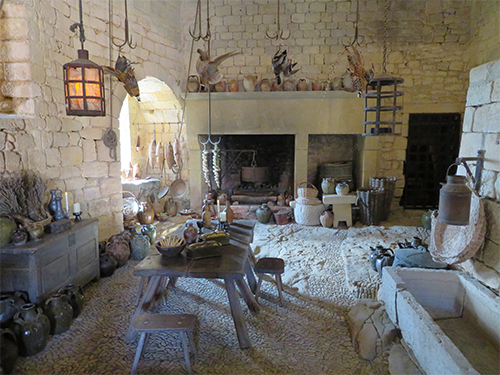
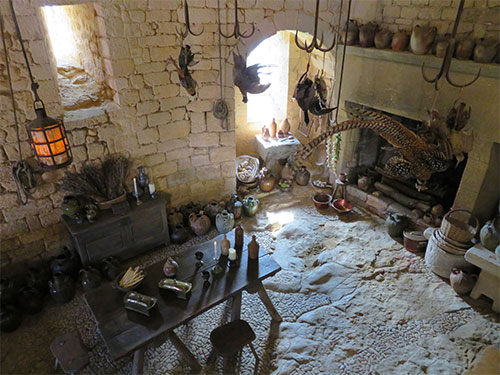
On the inside of the castle, there were many rooms to see; some with only hanging tapestries and open floors, some with just a table and bed, and some fully furnished with carpets, painted walls and ceilings, paintings, musical instruments, and tables dressed for a meal. All of which presented an excellent idea of how the castle might have once been decorated. On a lower floor was a kitchen, showing the rough stone on its floor, goods for food preparation, and a dining table with open slots at the ends, where soldiers would put in their swords before sitting down to eat.
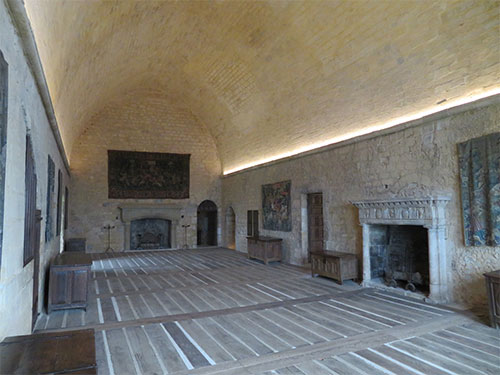
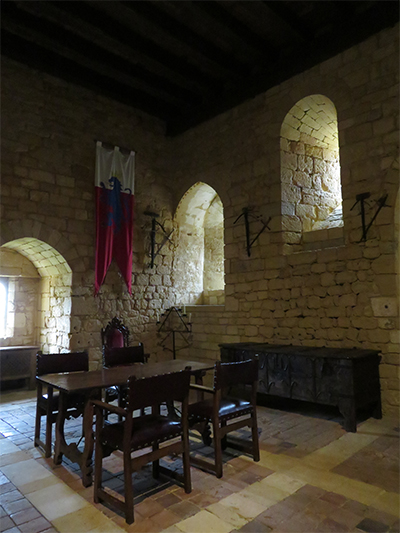
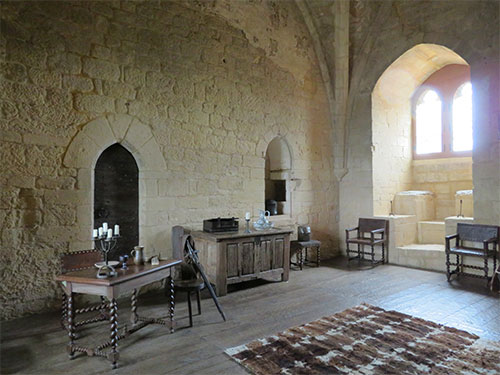
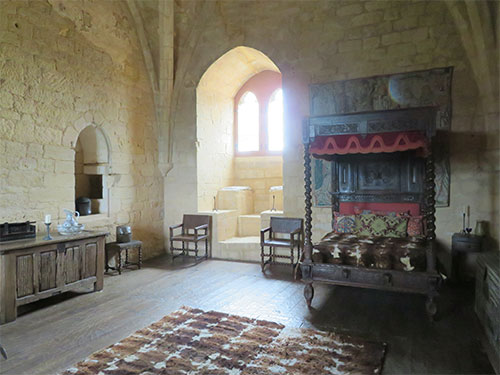
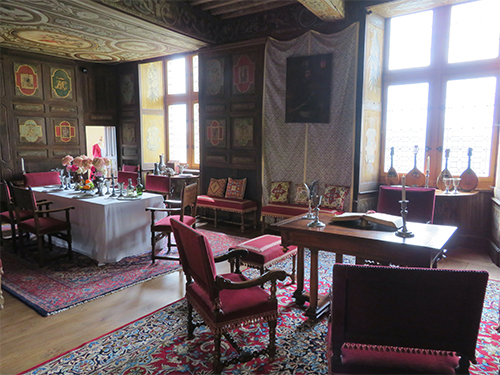
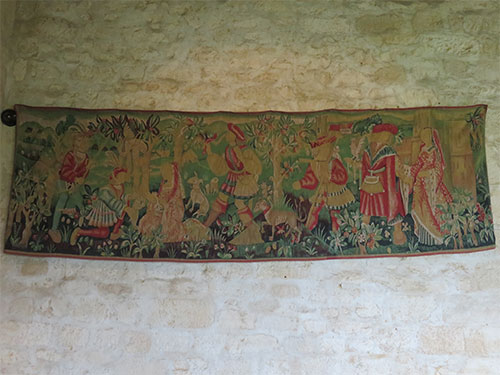
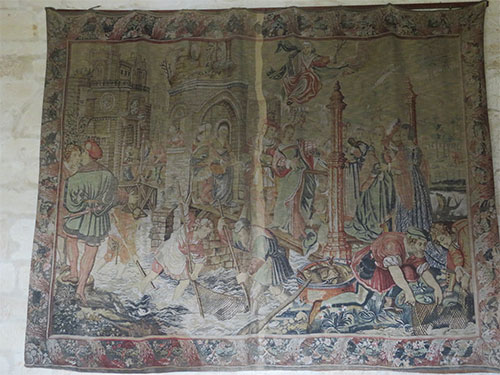
Benyac Castle at one time, was where the famous series of six tapestries, known as The Lady and the Unicorn, were hung, but now they are at the Cluny Museum in Paris. There were still many other tapestries that hung in the castle, along with intricate hand-carved antique dark cabinetry.
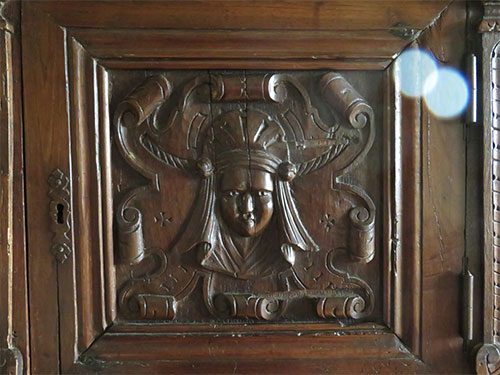
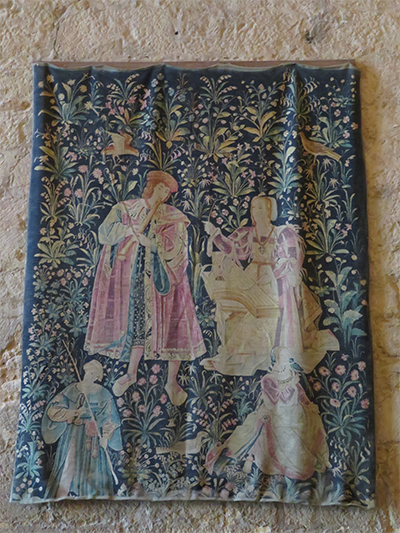
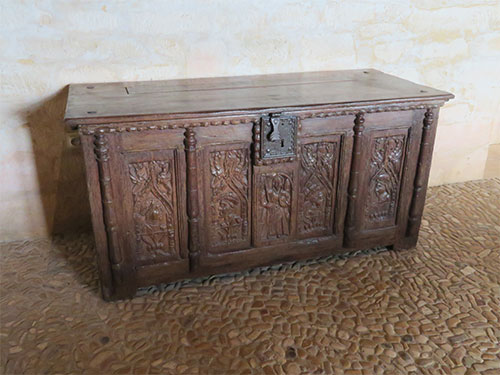
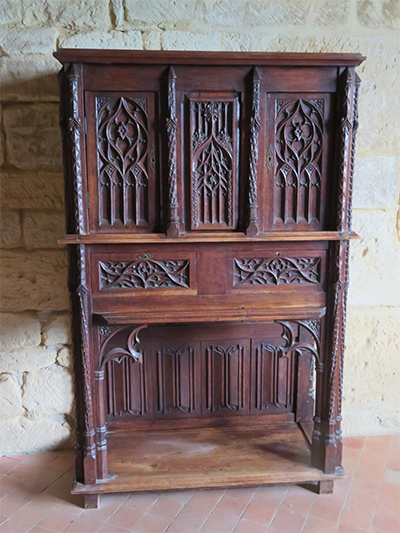
After completing our tour of the castle, we drove down to the lower town along the river to another parking lot, which our first parking ticket covered. We had wanted to visit some shops, but nothing seemed to be open. Perhaps it was too early in the season. We walked along the river for a while until a nearby restaurant opened for lunch. Vere had a burger with foie gras and I had a zucchini flan with a tomato pesto toast. For dessert, Vere ordered the walnut cake with chocolate drizzle and crème anglaise.
We left Beynac, following the river, and eight minutes away was our next castle, Chateau de Castelnaud. The castle sits on a high point on the land. Across the river and up on another rise, Castelnaud faces Beynac castle, and there is much history between them. Like many early castles, it has a long history.
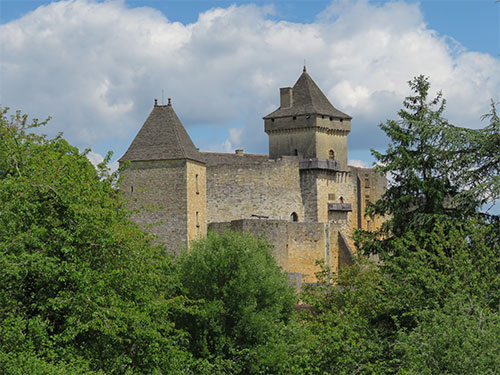
In 1152, Eleanor the Duchess of Aquitaine, became the second wife of the Duke of Anjou Henri Plantagenet (who two years later became Henry II King of England). It was this marriage at that castle, which would affect southwest France for the next three centuries. The pope delegated Pierre de Castelnaud to the Languedoc nobility, to encourage measures against the Cathars. In 1214, the castle governor of Castelnaud, Bernard de Casnac, a defender of the Cathar faith, was known for his mutilation of Christians. Heretics were to return to the “right” side, and to take control of Toulouse. That year, Simon de Montfort, led the crusade against the Cathars in the Albigensian Crusade, and seized the fortress. He also went on to take Beynac castle, among others. He turned Castelnaud into a garrison, reinforcing the walls, rebuilding the square keep, and the curtain wall with arrow slits.
In the early 1300s, Castelnaud had become a principal power of the region. Bickering between Beynac and Castelnaud became little, compared to the Hundred Years’ War that came to both of them. Ownership of the castle changed many times, seven times to an Englishman, but they were eventually pushed out by the French in 1442. A year later, the castle went to the Caumont family, who rebuilt the castle with new walls, towers, barbican, drawbridge, a main building, a pageantry room, and a kitchen.
Geoffroy de Caumont was born in Castelnaud in 1543, and he grew to become a man of war, winning battles across the countryside, capturing Catholic areas. He also oversaw the protection of Anne de Caumont, who had been abducted and returned three times. In 1554, Francois de Caumont married Philippe de Beaupoil, the Lady of la Force, beginning the long-running Protestant family line of Caumont-La Force. The eldest son became the Marquis de Castelnaud.
After the Revolution, in 1789, the castle sold as a national asset, and after one set of owners emigrated, Castelnaud was abandoned, and for a time used as a stone quarry. The artillery tower and the southern main building lost their tops, wood rotted, and plants began to grow within. Then the Rossillon family from Beynac, bought the castle and began restoring it. In 1965, Philippe Rossillon, mayor of Beynac-et-Cazenac, bought the Château with his wife, to renovate it, and the following year it was declared a historic building.
We were able to drive to the top of the hill, nearest the castle to park. But then we had to walk down steep alleyways to the castle entrance, and then climb up toward the castle and see it from all angles.
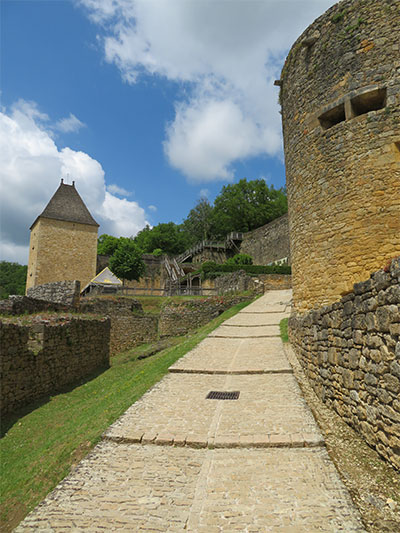
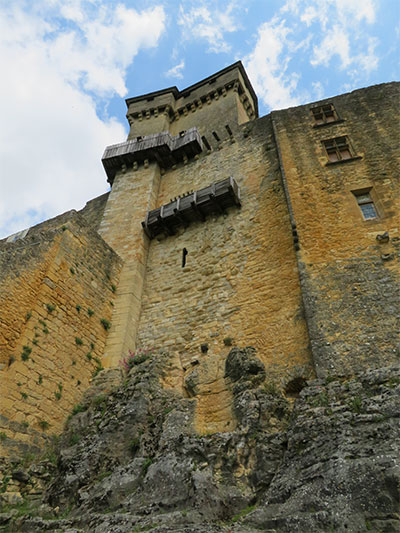
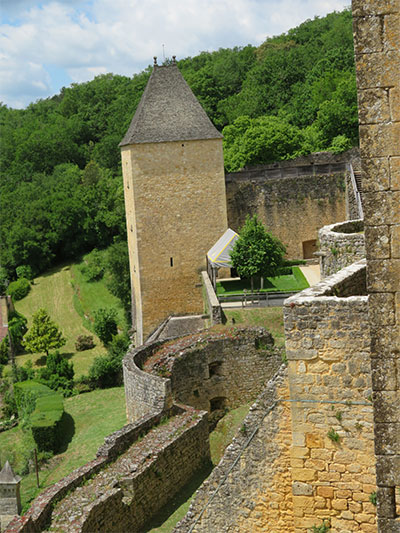
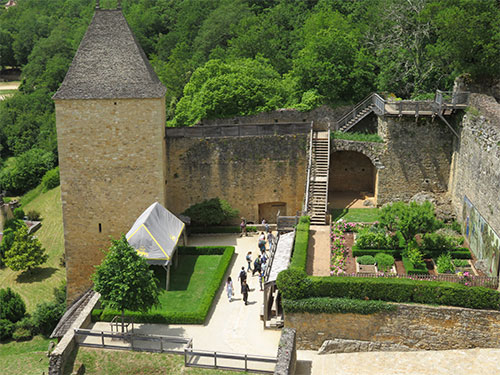
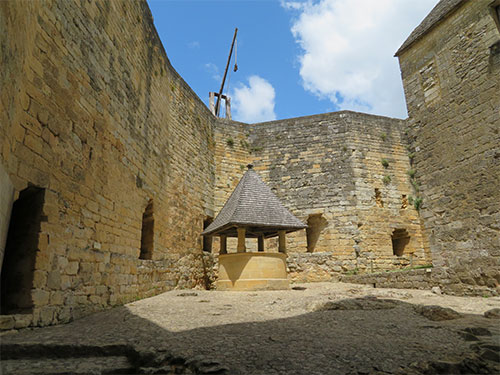
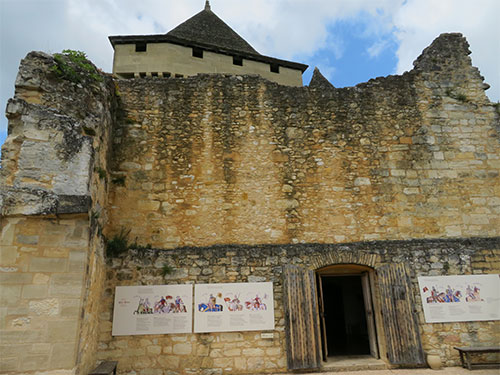
There were many rooms with displays. One was the armory room with dressed knights, a full-size model of a knight mounted upon a taxidermy horse, and lots of weapons on display lined the walls. There was a kitchen, the king’s chamber, and a small theater with a short film on the history of the castle. Another room had a miniature display of the castle and nearby town, with a recorded voice that repeated in French and in English, the history of a key battle, showing lights where action had taken place.
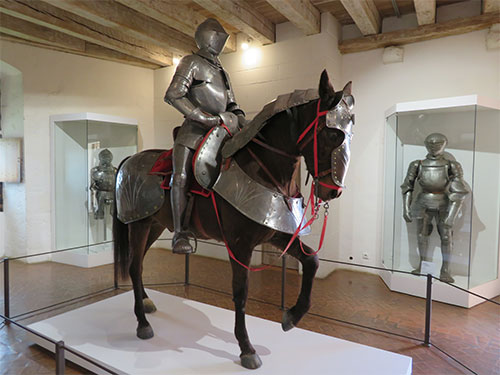
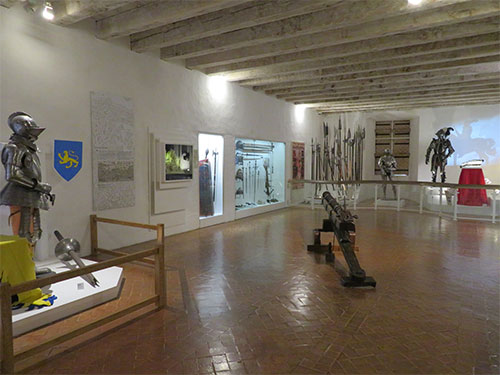
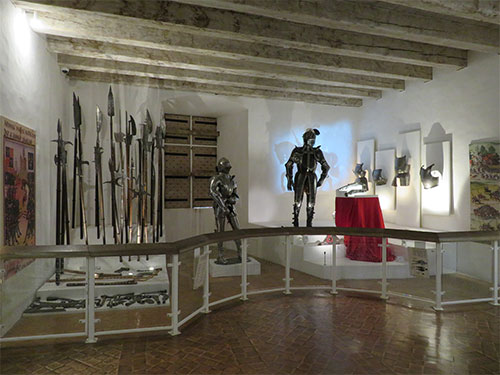
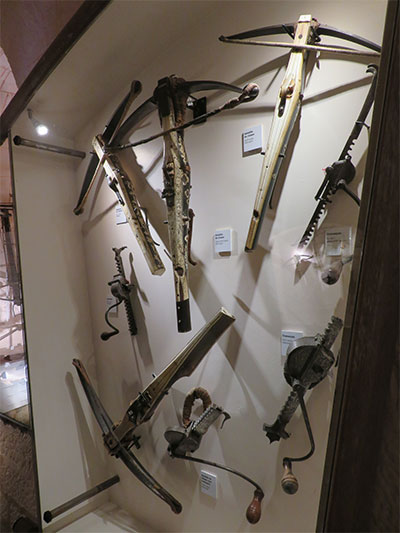
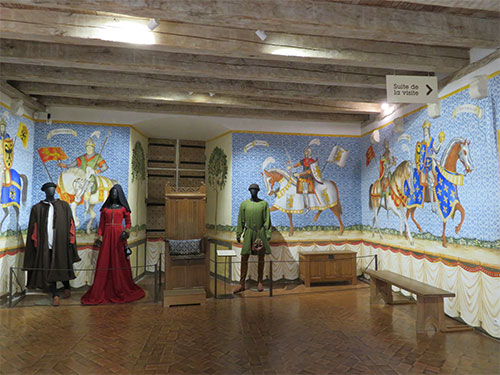
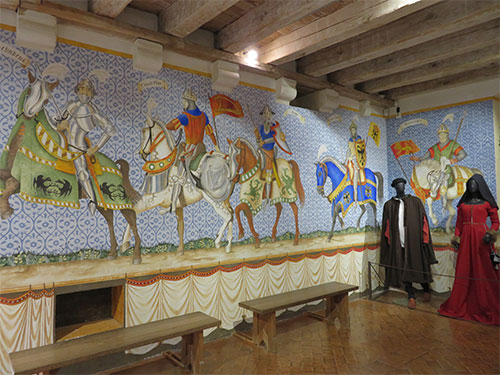
One of the rooms was the Nine Worthies, a presentation emphasizing the highly prized nobility at the end of the Middle Ages, which is seen in a mural painting that surrounds the room. Three knights from three different periods are represented. From the Old Testament are Joshua, David, and Judas. From Greco-Roman antiquity, Hector, Alexander the Great, and Julius Caesar; and from modern Christian times, King Arthur, Charlemagne, and Godfrey of Bouillon. Each is drawn with the weapons and defensive equipment of their time, and several rooms display these articles of battle.
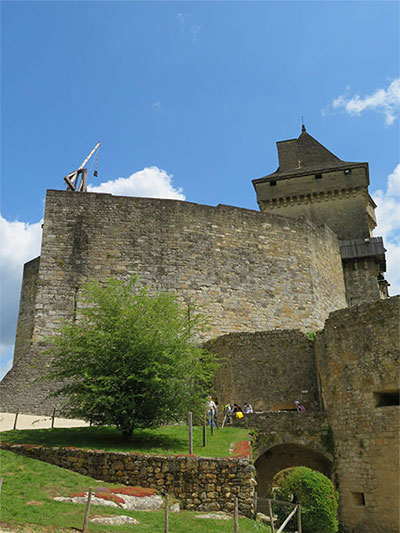
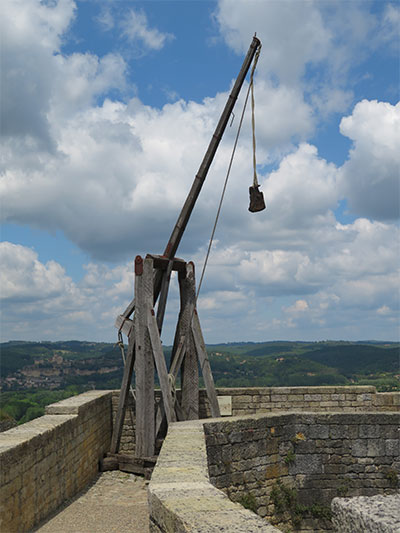
In 1985, Philippe Rossillon’s son took over running the castle, and opened the château to the public. He created the Museum of War in the Middle Ages and began the reconstruction of life-size trebuchets and other siege instruments with demonstrations for the tourists. Many of these throwing weapons were mounted on the upper terrace. On a lower terrace, children gathered and were instructed on how a trebuchet worked. Finally, the large siege weapon launched a projectile over a wall to an empty lot, and the kids excitedly yelled when it was finally released.
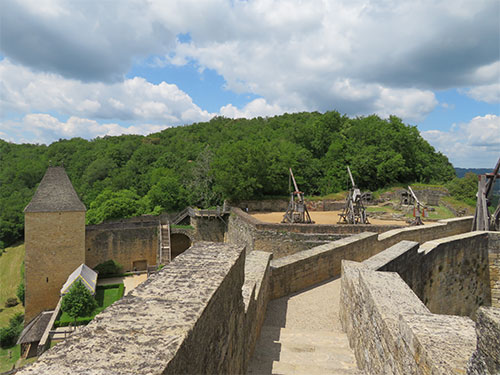
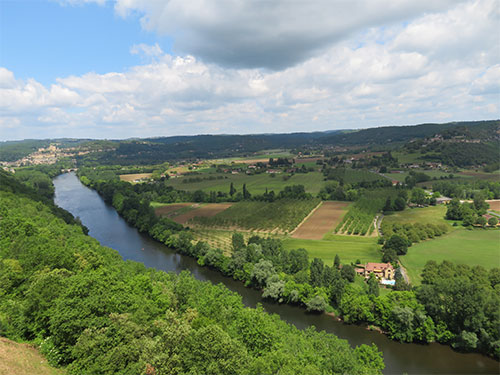
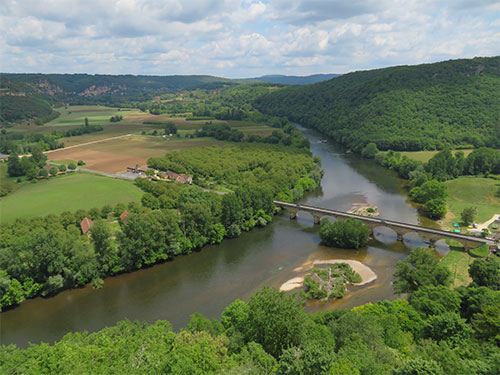
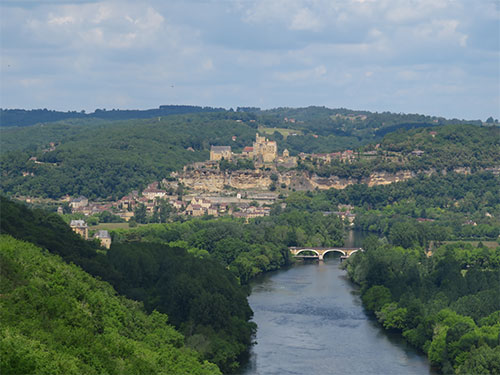
From the highest point at the castle, we had great views of the river in both directions, and in the distance, we could see Beynac Castle, where we had just come from.
We took our time in the gift shop, and ended up buying a book on the site and a small tapestry of the Tree of Life. After going up and down stairs in and around the castle, we left exhausted, yet still had to climb the steep hill back up to our car. Castelnaud was an entertaining and educational castle to explore.
At the B&B we rested, and pulled out all of our purchases so we could get our suitcases packed for our trip back to Bordeaux the next day. In packing, we realized we had too many bottles of wine to pack for a flight home and therefore we had to drink some, so we opened a half bottle of Sauternes and enjoyed it before dinner.
For our last evening at the B&B, we booked another dinner with our hosts. Our second dinner with Valerie and Didier was just as fantastic as the first. For appetizers, Vere had foie gras, and I had the asparagus with balsamic and pine nuts. For the main course, we had a portion of a chicken breast stuffed with mushrooms over rice. For dessert, she made a ricotta pie with pear and lemon zest. Everything was delicious.
 The official website of Lita-Luise Chappell, writer on sex, magic, food, distant lands, and everyday life with articles, poetry, novels, travelogues, rituals, cookbooks, and short-stories.