Thursday, May 15
Our next destination was an hour drive north into the Dordogne department of the Nouvelle-Aquitaine region.
We stopped in the small medieval fortified town of Montsegur for lunch. We parked just off the main street and walked along its covered arcades, which surrounded the large central market hall. A series of cafes lined the arcades, where we picked one. Vere had a burger that came with au gratin potatoes and a small salad. I had the Chevre Chaud, as usual, which was with white asparagus, beets, and carrots, in a honey vinaigrette. For dessert, we shared a specialty of the area, known as a Far Breton. It is a type of flan with prunes in it. Generally, the pits are removed before baking, but they were not in this recipe. In one slice, we had four pits, but the flan was delicious.
As we began to leave town, Vere spotted a second-hand antique shop, so he doubled back and we went in. He found a book and I found a small blue and yellow porcelain bowl that would match my kitchen at home. I found out that the style is a Sarrequemine Cluny pattern which was produced sometime between 1875 and 1900.
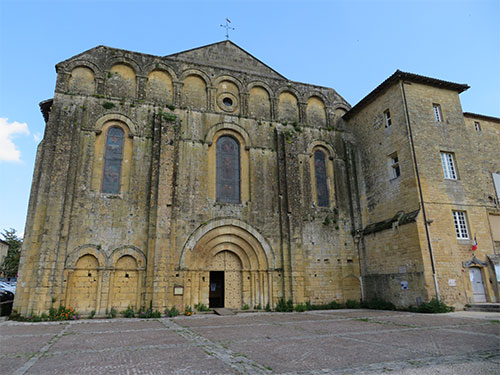
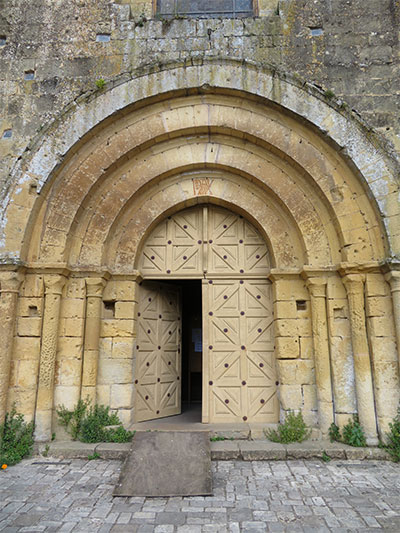
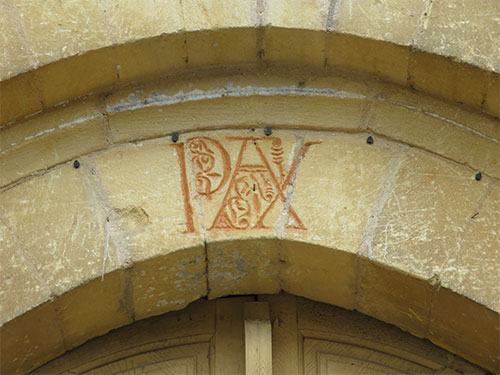
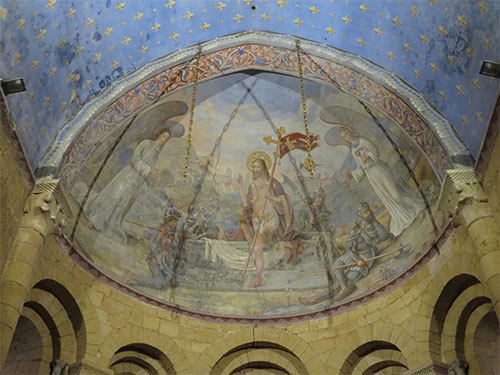
Back on the road, we drove another thirty minutes to the small town of Cadouin, to see Cadouin Abbey with its Gothic cloister filled with ceiling art. Founded in 1115, the church gained notoriety, power, and wealth, as some time in that early period, the abbey was given a shroud, said to be the one which covered Jesus Christ in his tomb. Pilgrims would stop there to see it on their way along the route to Santiago de Compostela in Spain. It was later thought to be a fake coming from Egypt, but a copy of it is in the small museum, and the chest it was brought in, are on display.
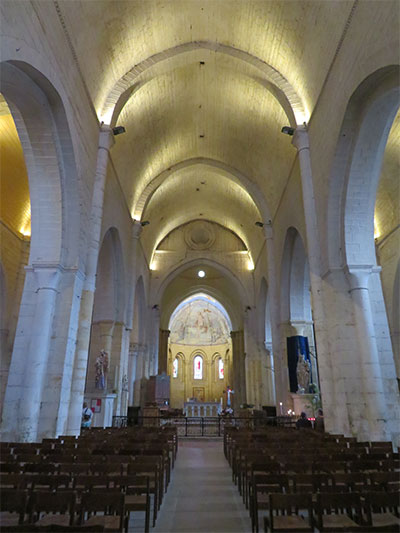
The Romanesque church was large with three naves, and some beautiful frescoes.
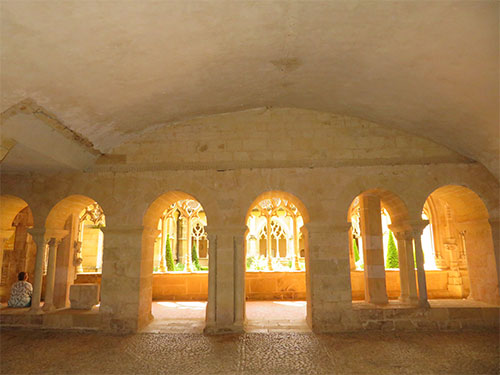
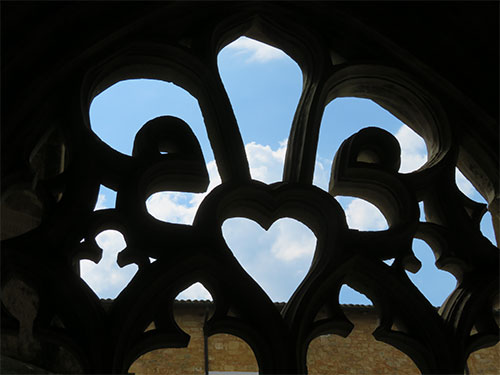
The Gothic arches around the cloister were ornately designed in lace-like patterns of flowers and hearts. The center of the cloister was pretty, with some white flowers in bloom.
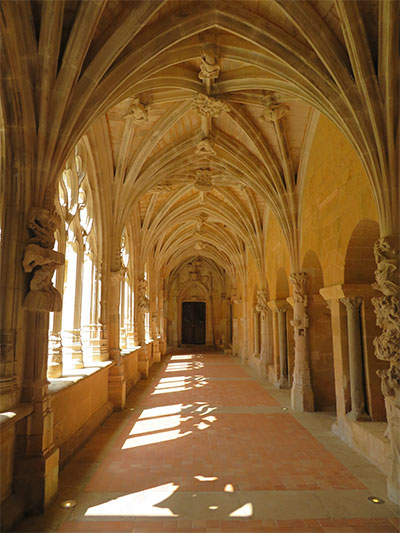
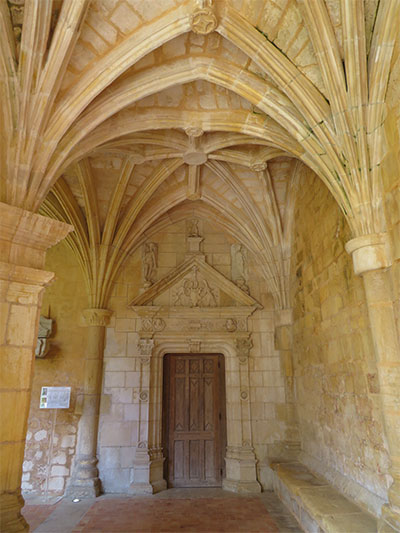
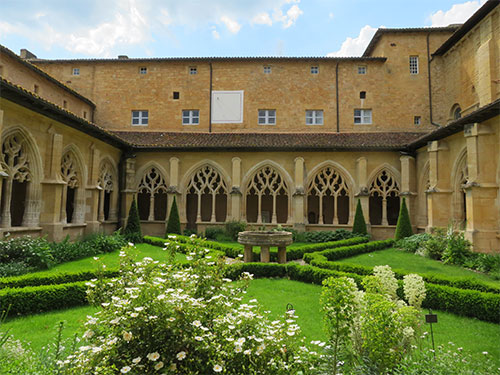
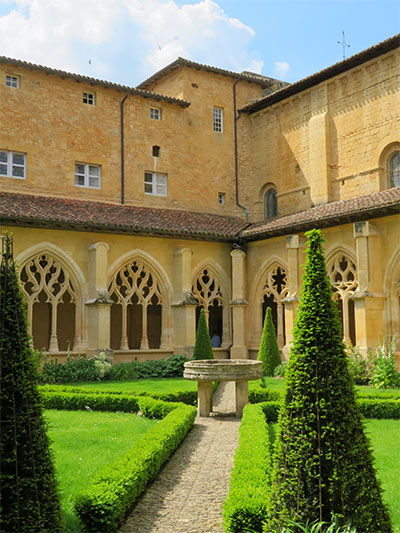
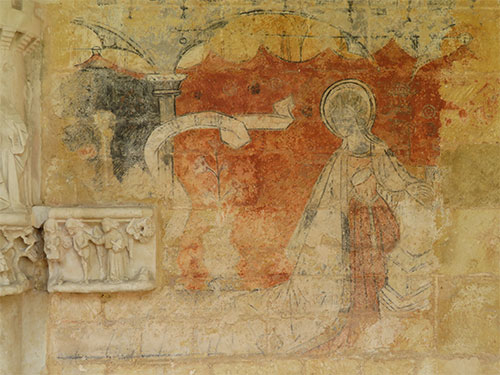
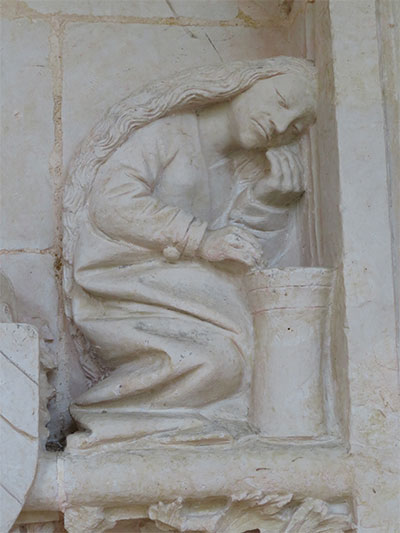
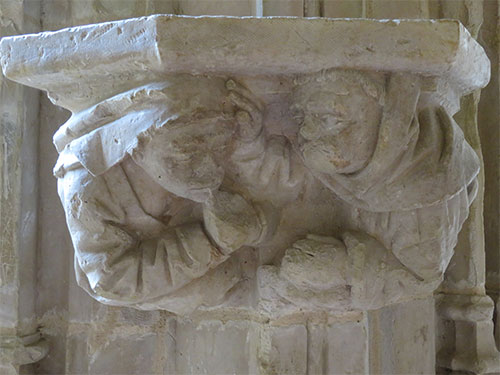
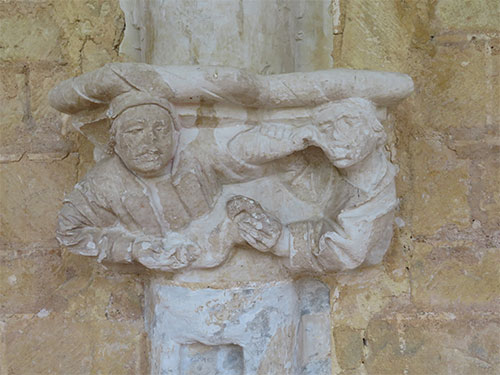
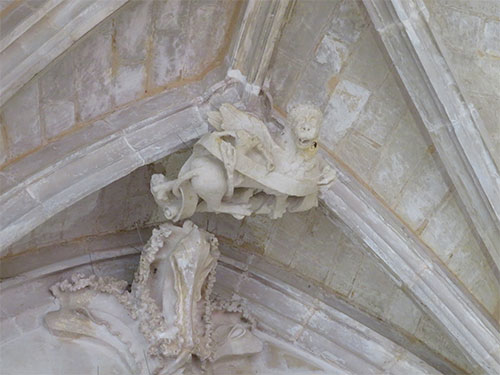
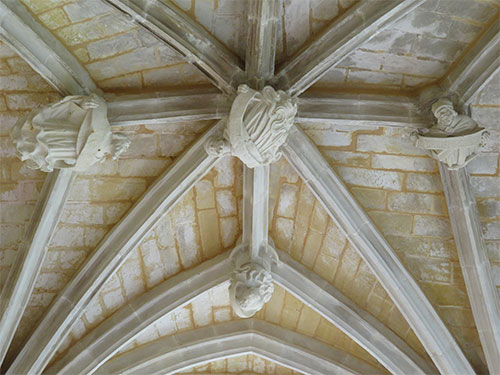
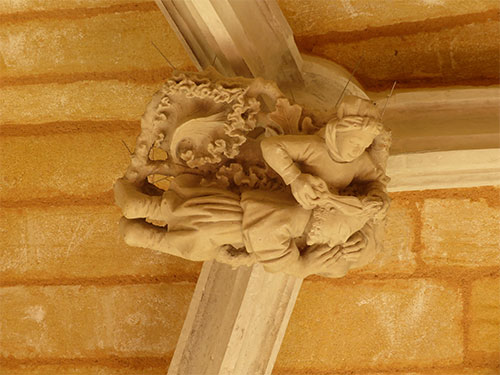
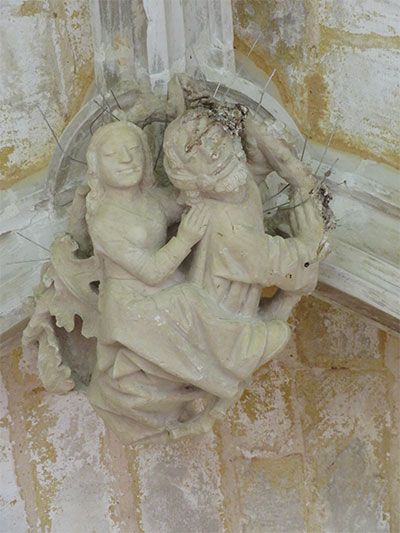
We were not there for the church, but to see the stone carvings in the cloister from the late 15th century. The Cistercian monks carved biblical themes like greed and anger, rendering them to look a bit cartoonish, and there were some patches of frescoes along the walls. Only twenty-five of the original ninety-five remain.
We saw a monk comforting a woman with a pat on the head, monks drinking and sharing bread, a lion with a bird upon its back, flying saints, a woman comforting a man who had a bird’s nest on his head, and Delilah cutting Sampson’s hair.
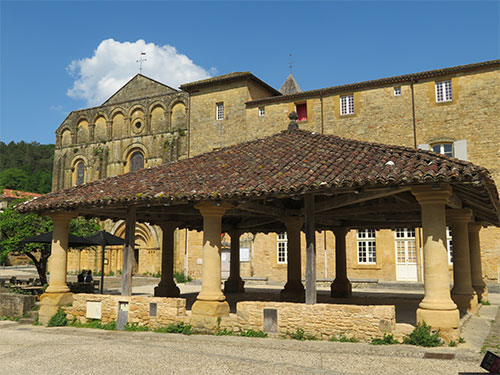
Outside in front of the church was a wide square with a central open covered market. Opposite the abbey were shops that sold tourist items, antiques, food, and wine.
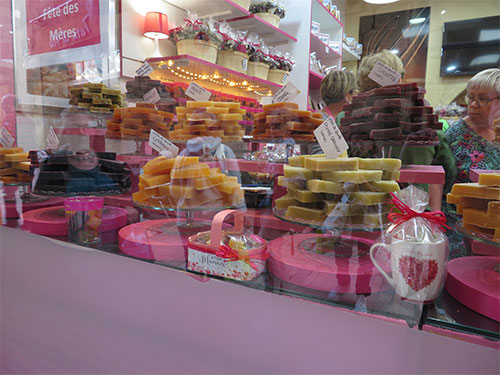
In the food shop, we were offered a wine tasting of two different wines. The second sweet wine was up to the level of sweetness that we like, so we bought a bottle, along with some very fresh, soft nougat. They also had a confection for sale called Myrtilles Cake. I thought this was the French spelling for the myrtle plant, which has essential oils used as an antibacterial and antiseptic, and the berries and leaves can improve digestion, but in a cake? This French word was not one I was familiar with. I looked it up and it translated to blueberries. The difference in spelling was slight, but made a big difference, being another plant entirely. The three of us laughed and learned the difference.
Then we left and forty-five minutes later, after winding through a curvy wooded narrow road, we finally arrived in the medieval town of Sarlat la Canéda. We had reserved for eight nights, to stay at Le Close Vallis de Sarlat (meaning the end or close of the valley). It was four miles out of town, but a lovely B&B property that had been converted from an old farm.
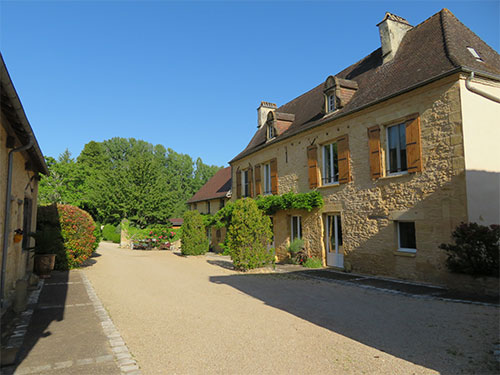
On entering the property, there was a gravel driveway with parking off to the right before the buildings. We met our hosts and were given a brief tour. The B&B consisted of two long buildings with rooms, a kitchen, dining room, and two separate cottages. Our hosts were Valerie and Didier, and their offices were near the front in a separate building on the right. We unloaded the car and brought everything into room #2, right off the dining room. We thought the room might be too noisy so close to people dining, but it proved to be perfectly situated for us and noise was not a problem. The room was small with no desk, but we were told we could use a table in the dining room any time we wanted, where we could sit with our laptops and write.
We also met Horkos, the cat. We had to look that name up, and found out that Horkos was the son of the goddess Eris (of strife). Horkos was one of the divine enforcers of oaths, which were an important part of the ancient Greek system of justice.
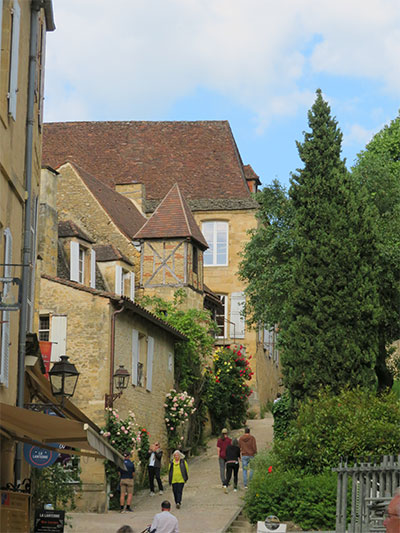
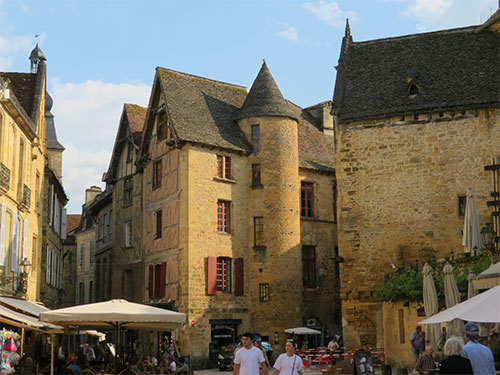
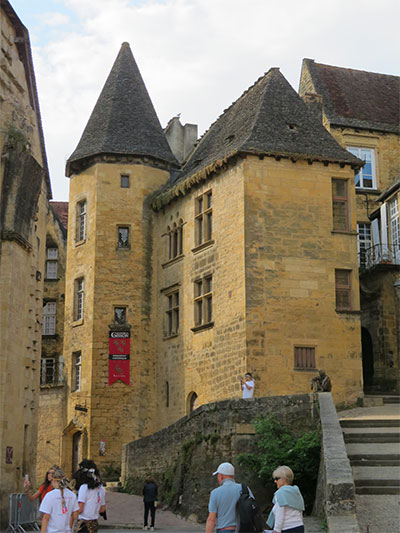
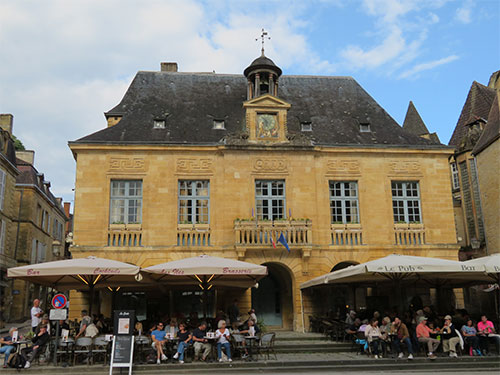
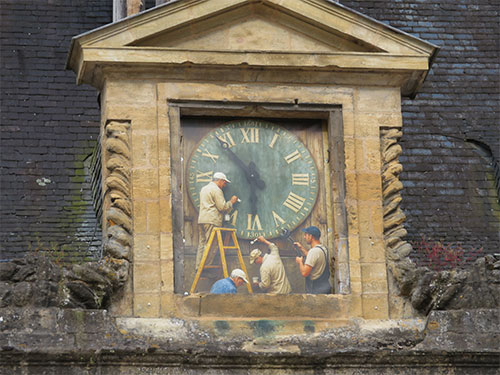
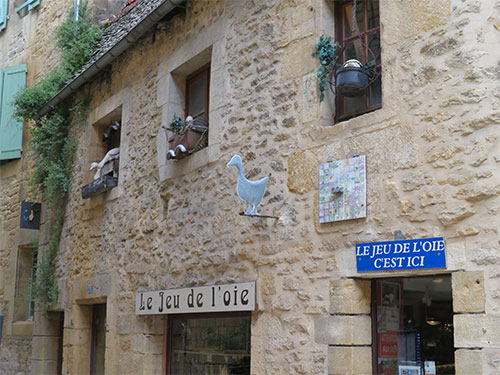
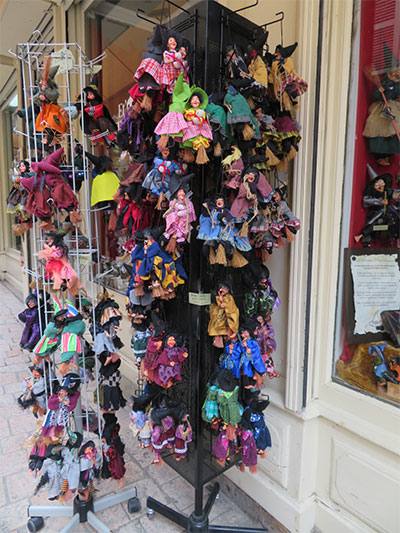
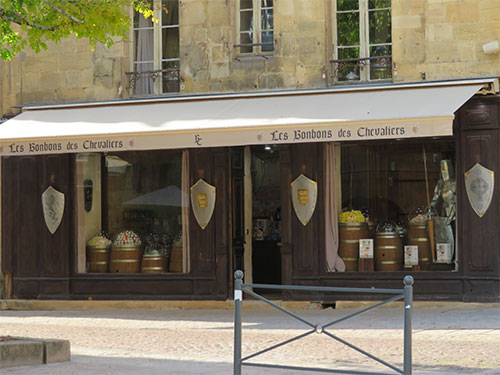
At 7:30, we drove back into Sarlat. The old medieval quarter in the center of town is historic with Renaissance architecture, full of winding pedestrian-only streets, and picturesque shops with old signage. The village has tall golden stone buildings with flat lauze limestone tile roofs that have turned dark over the years, which were either squared, conical, or even six-sided. Cafes and restaurants are everywhere, even on the front steps of their city hall. This popular town full of art and history, only has a population of 10,000 off-season, but swells to two-million in the summer. The area’s largest agricultural product, surprisingly, is tobacco, but also corn, hay, walnuts and walnut oil, cheese, wine, cèpes wild mushrooms, and truffles. But there are also colorful doll and candy stores.
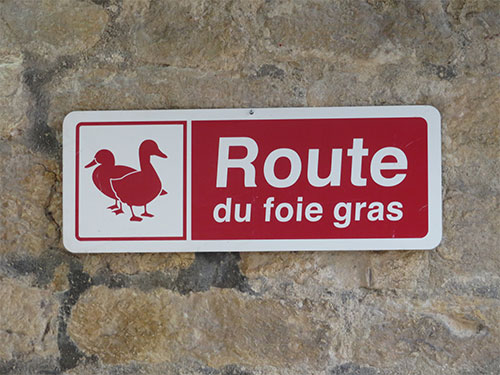
Additionally, from the area, there are several large foie gras factories raising ducks and geese. Their wide array of products from their breasts, thighs, and wings, are on every menu and sold in most shops. That strong culinary heritage is present with three golden bronze geese in the Place du Marche aux Oies (Goose Market Square), where the traditional goose market once stood, and is now revived every year on March 1, with their celebration of Fest’Oie (Goose Festival), with even a goose parade and of course booths that sell the famous offering.
We had dinner twice in the old city center while we stayed at Clos de Vallis. The first one was at Le Bistro de l’Octroi (“the granting bistro”). Vere had a steak with a red wine, beef sauce with truffles, potatoes, and a squash smear, and I had the mushroom tart with a small salad nestled in a thin pastry cup. We both had a glass of Monbazillac, the same sweet wine that we bought a bottle of earlier that day. It’s very similar to a sauternes, but has a higher percentage of Muscadelle grape. Then, Vere had a lava-like cake with vanilla ice cream, and I had the crème de marron (chestnut cream) in a delicate small glass. This delicious combination of pureed chestnuts, sugar, and vanilla melts in the mouth and smells like toffee. After dinner we walked a little bit about the old town, then returned to our B&B.
 The official website of Lita-Luise Chappell, writer on sex, magic, food, distant lands, and everyday life with articles, poetry, novels, travelogues, rituals, cookbooks, and short-stories.