Saturday, May 17
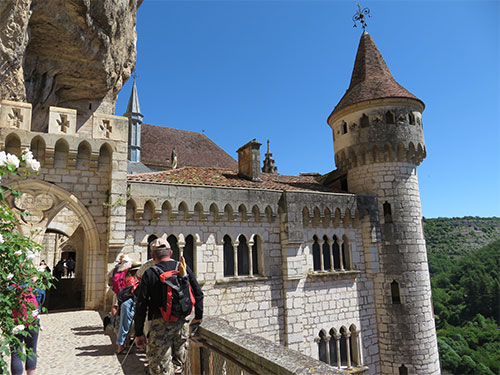
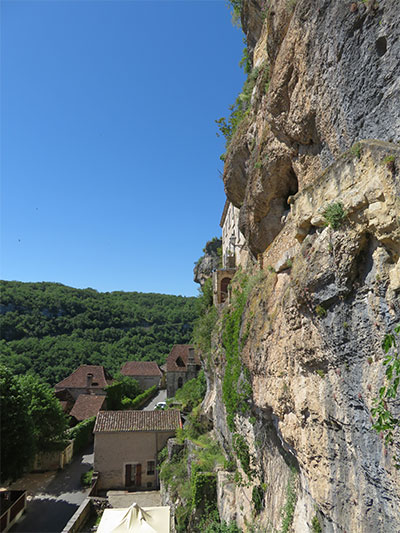
Our first site for the day was an hour drive to the cliff-side town of Rocamadour. This commune in the Occitanie region is in the heart of the Causses du Quercy Regional Natural Park, a protected town and area. This cliff area was inhabited by humans in the Paleolithic period, and during the Iron Age by the Cadurci people, an ancient Gallic (Celtic) tribe. A described history told the struggle of the Gauls against the Romans during the Gallic Wars. In the Middle Ages, three levels of the village were built into the cliff, the lay workers below nearest the river with the shops, the clerics linked to the religious works in the middle with the churches, and the knights above next to the castle.
In 1105, a small chapel was built, and the first abbot came in 1112. In 1148, the first miracle was announced, which began the fame of the Black Virgin, bringing pilgrims. Even Henry II, husband of Eleanor of Aquitaine, came to thank the Virgin for his healing.
An old buried body was found and presented as Saint Amadour, who had been thought to be a person close to Jesus, so voila, Rocamadour now had its saint. By the end of the 13th century, Rocamadour’s influence was secured, and the castle was built with three towers and a moat. But the town had its ups and downs. In 1427, a huge rock from the cliff fell and crushed the Notre-Dame chapel. It was rebuilt by 1479. During the Wars of Religion, Protestant mercenaries ransacked, pillaged everything of worth, desecrated relics, and burned all religious buildings. The village made a small recovery, but was again looted during the Revolution. By 1872, the sanctuaries of Saint-Sauveur, Saint-Amadour, and the Notre-Dame chapel had been rebuilt. A faster way to reach the pilgrim site occurred with the invention of the automobile. Approaching the site, we could see the town from far away, with it perched on a high cliff.
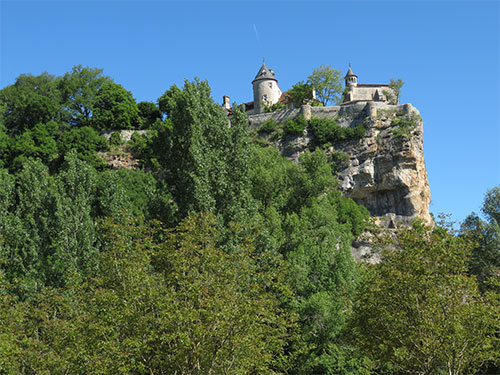
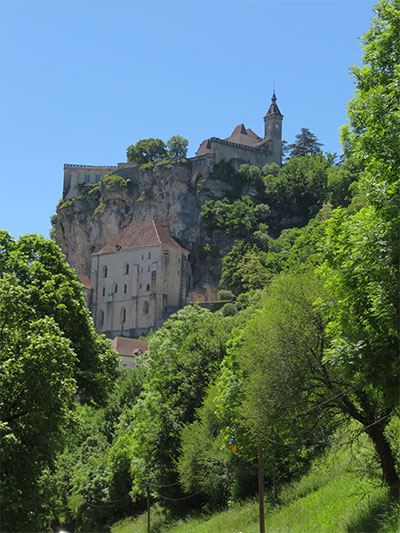
We arrived about 10:30, drove through the one side of the town open to cars, then had to drive down the hill to park below the hillside. We were delighted to find that a small open electric train ran every fifteen minutes up the steep incline to the town.
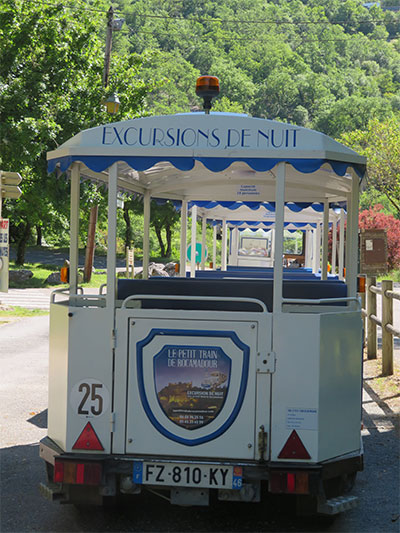
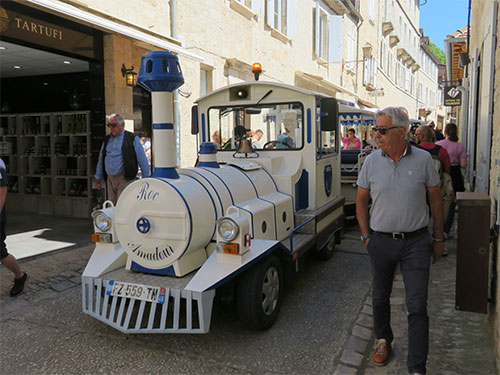
We took the train and walked the one main street, filled with shops and restaurants.
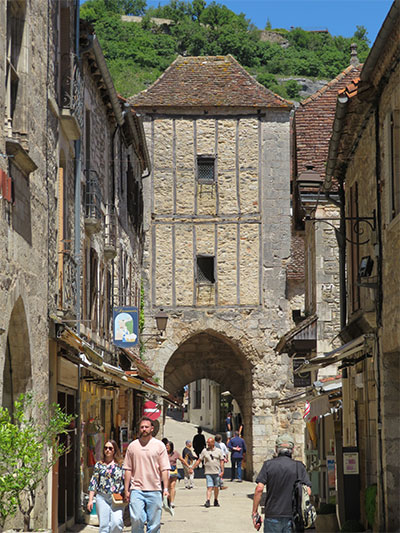
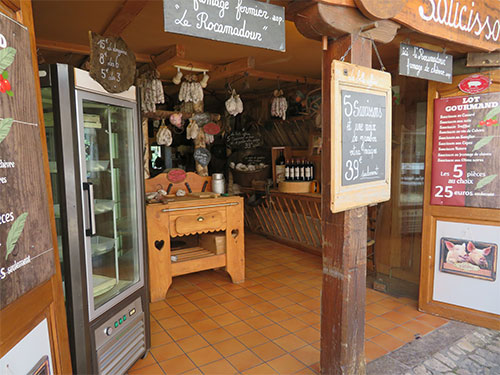
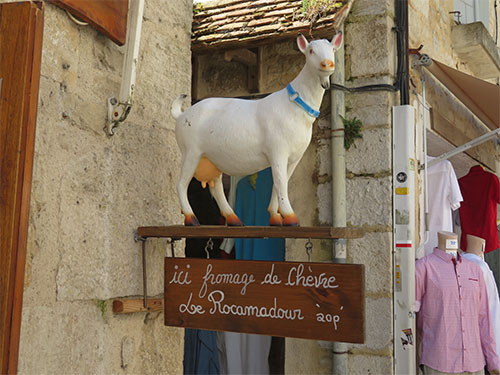
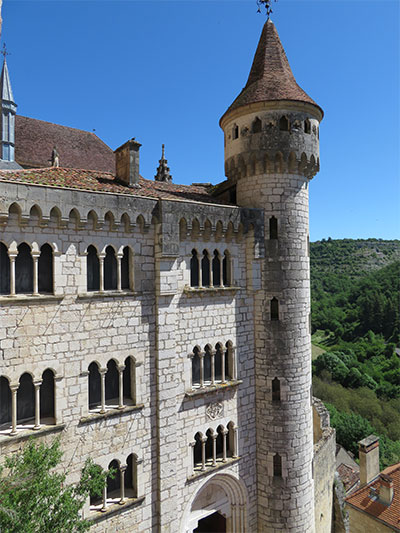
We came to an elevator that goes up to the next level where all the churches are. We stepped out to find ourselves surrounded by many churches and chapels. Up a grand staircase, is the Bishop’s Palace, the Saint-Sauveur Basilica, the Chapel of Sant-Baptiste, the Chapel of Saint-Blaise, the Chapel of Sainte-Ann, the Chapel of Saint-Michel, the Chapel of Notre-Dame, and there is the Saint-Amadour crypt. We made our way, first, to the Notre-Dame church.
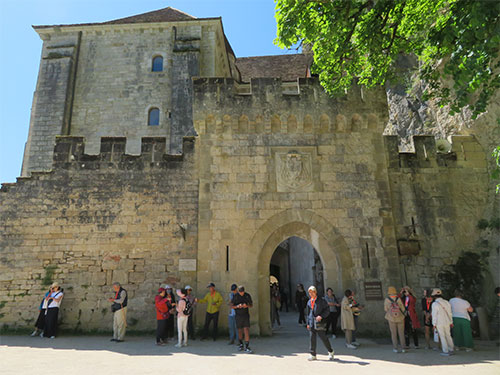
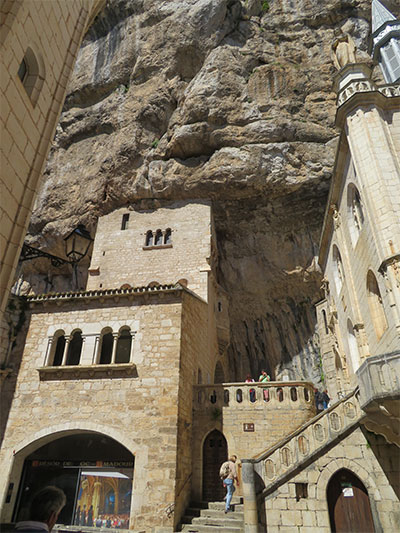
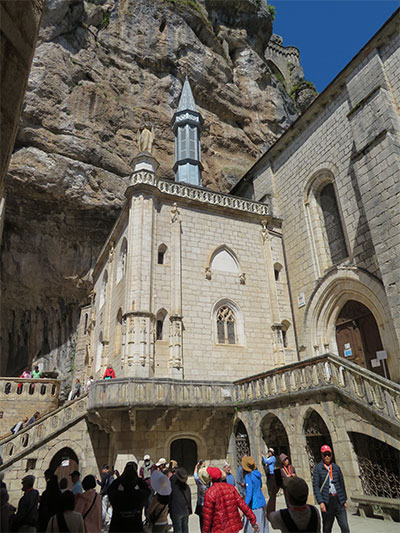
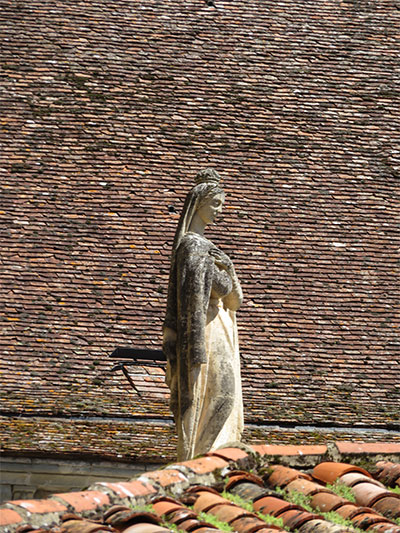
Our primary goal was to visit the Chapel of the Black Virgin. We entered through the front door of the Sanctuary of Notre-Dame de Rocamadour church, and the Chapel of the Black Madonna was just to the right. We looked up to find the Black Madonna on a raised platform. She was smaller than we imagined, but still stood at twenty-six inches high, of dark walnut wood. She is attributed to 120 miracles, most of regained sight and speech.
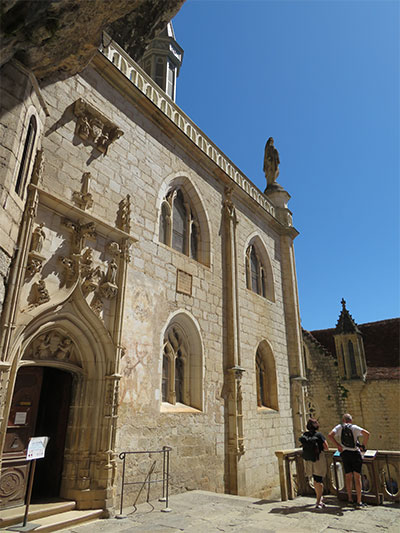
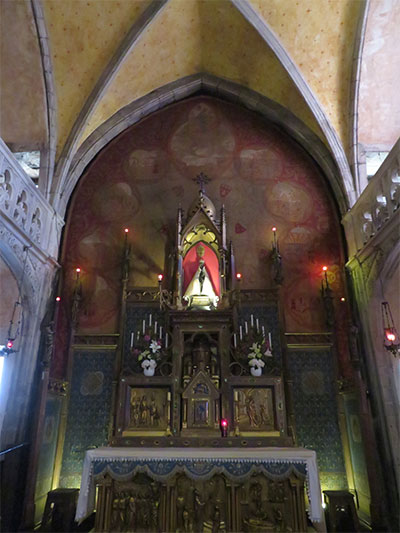
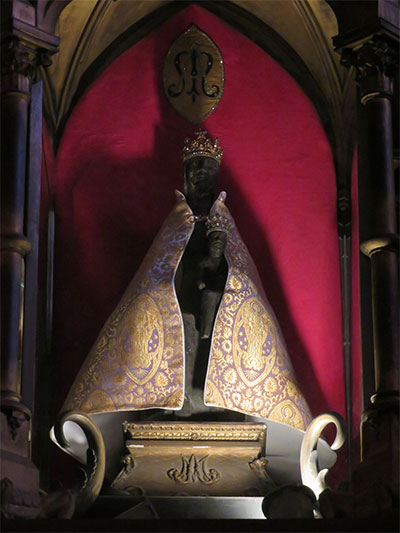
The following describes the final aspect of the penitent pilgrim making their way to the Black Virgin:
“The final test of the pilgrimage, consists of climbing on one’s knees the 216 steps up to the church. Finally, having reached the interior of the sanctuary after this ascent, the pilgrims left various object offerings, promising a vow. The best known that remain, are the irons of condemned prisoners freed from their chains, and small boats of saved and grateful sailors. There are plaques of thanks, engraved on marble that hang on the wall of the chapel, from the 19th and 20th centuries. A pilgrim’s badge is the sportelle, a small metal that was sewn on the clothing, of the Madonna and Child in a vesica piscis”.
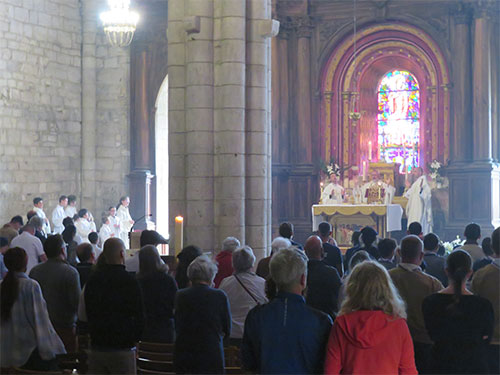
While there, we could hear that a Mass was being held in the church, to the left of the chapel. We peeked into the packed church to hear the priest intoning and listened to the congregation singing.
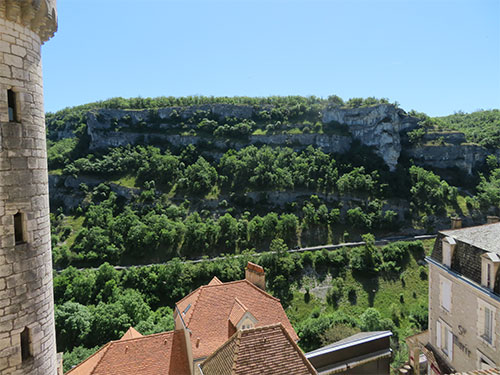
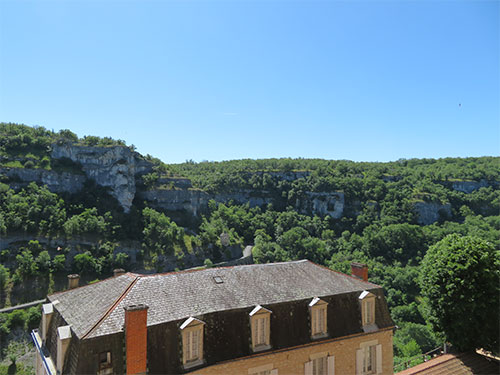
We backed out and continued to walk to the far end of the high terrace, where we could look down upon reddish roofs descending down the hillside. On that level, we could look across to the church towers, where swifts swirled, dived, and flited in and out of the small holes in the stone walls. Looking further up the cliff to the highest level, we could just see the edge of the chateau, but on that day, it was closed to visitors.
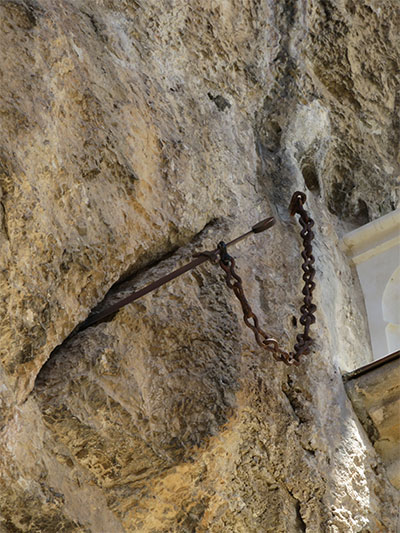
On the wall above us, we saw a sword stuck into the stone with a chain, and wondered what it was. The legend is that the sword is called Durandal, and it was given to Charlemagne by an angel. Charlemagne entrusted it to one of his knights, named Roland. The sword was said to be unbreakable, and according to an epic poem, Roland was desperate to fight at the Battle of Roncevaux Pass. When he did, he tried to destroy the sword, so it would not fall into enemy hands. When Roland became mortally wounded, he hurled it into the air, and miraculously, the sword traveled hundreds of miles and embedded itself into the cliff face at Rocamadour. It became known as the “French Excalibur”. However, after a couple centuries the sword disappeared and a replica was put in its place. But in 2024, it was stolen again, and a second replica had to replace it. Now it is chained to the wall.
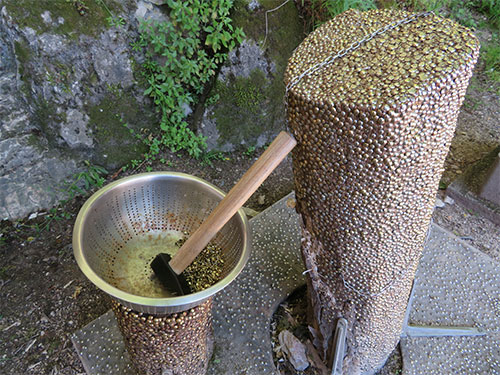
Another oddity was a post that was full of brass brads. It is meant for those who are on a pilgrimage, to hammer into the post and they will be protected on their journey. There is no legitimate practice
with any known cultural, historical, or legal basis for this, and is thought to have simply become a tourist gimmick.
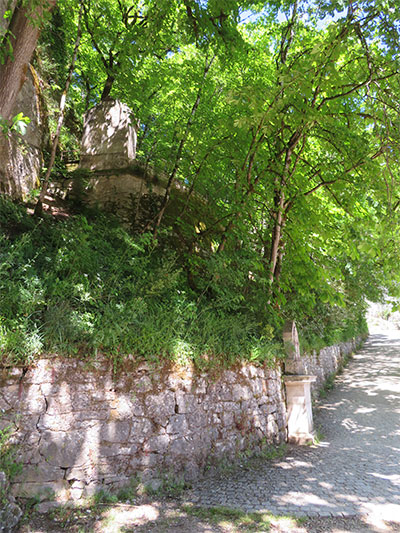
Back down the elevator, we found an outdoor restaurant for lunch. Vere had a galette (a savory crepe made out of buckwheat flour) filled with chicken and topped with a Rocamadour blue cheese sauce. I had a salad with egg, lettuce, croutons, and pear. Then we walked the main street further. At one point we looked up and could see all three levels to the town.
We found a shop that had tourist items, so we found several things that caught our eye. After reaching the end, we returned to the main square and waited for the electric train to return. While waiting, Vere bought a sandwich to go. We had decided not to go out for dinner that night, and instead stay at the B&B. Once we descended, we left Rocamadour.
We had originally thought of driving 45-minutes east to go to the town of Figeac, to see the museum dedicated to Jean-Francois Champollion, who had deciphered the Rosetta Stone. Instead, we changed our plans and headed to some gardens we had scheduled for later in the week. But rain was scheduled on that day, so we went while the sun was out.
The Gardens of Eyrignac Manor are a remarkable set of gardens that have been there since the 18th century. Gauthier de Costes de la Calprenède lived there in the 1600s. He is the man who coined the phrase, “proud as a peacock,” referring to his gardens. During his time, he began with just an intricate French garden, but as time went on, other gardens and buildings were added, such as Italian Renaissance and medieval gardens. The grounds contain over 300 topiary sculptures, 50,000 yew, hornbeam, and box trees, and unique topiary-shaped bushes. Today, it is a place where earthen paths weave through the gardens, where people come to walk, refresh themselves with viewing spanning green vistas, and even wed, said to be “a dream of harmony”.
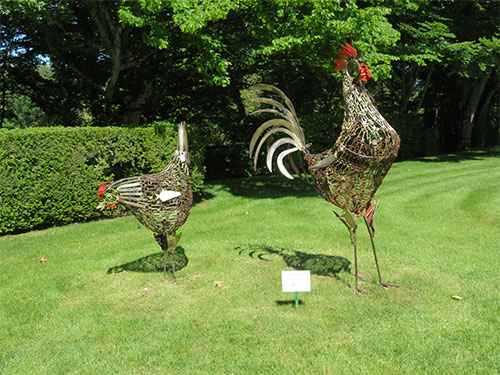
For the season, the gardens were showing a special display of Cogs, rooster art, set upon the lawns.
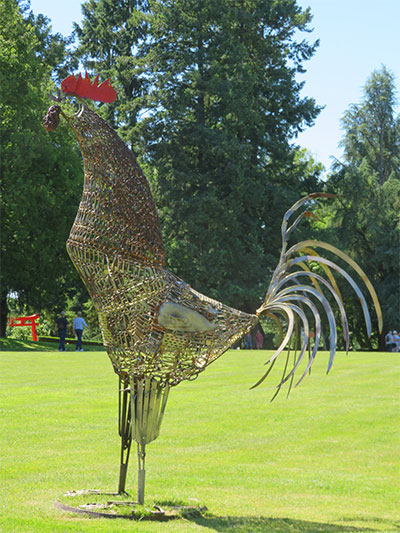
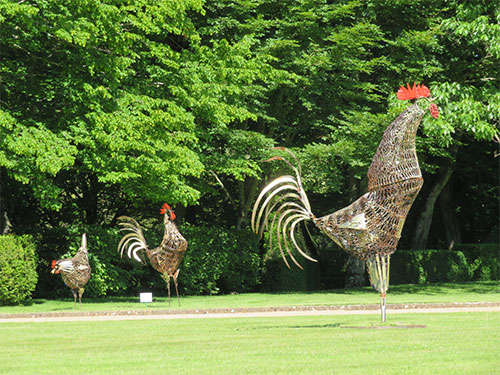
We had arrived at the beginning of the year’s spring pruning, which would continue through May, so we were seeing a bit of the overgrown and slightly wild side of some hedges before their first pruning. We followed paths that surrounded expansive freshly cut lawns and down topiary walkways.
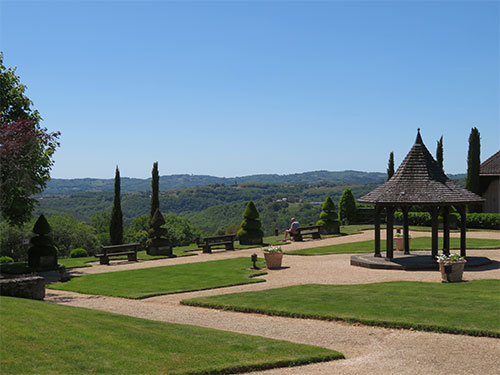
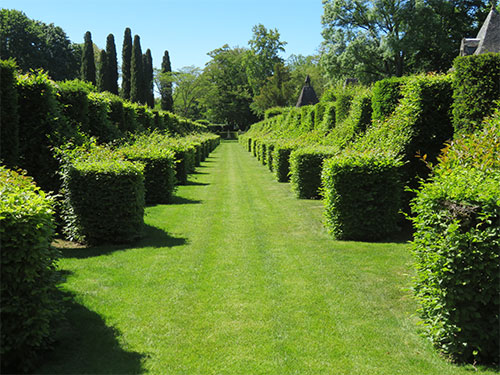
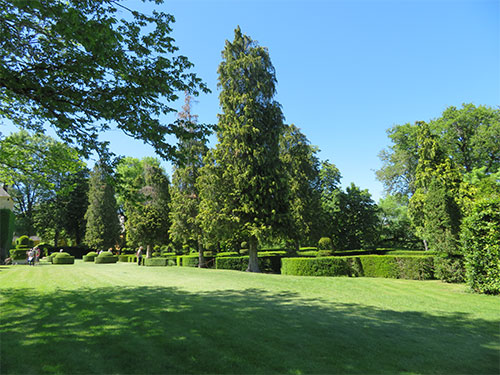
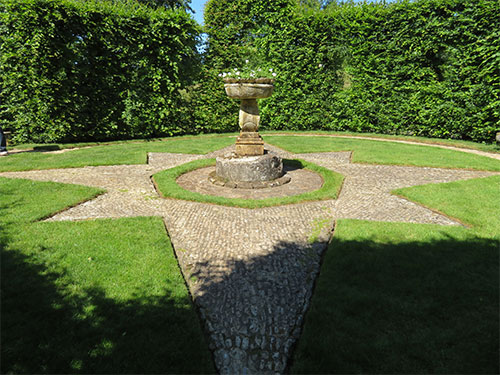
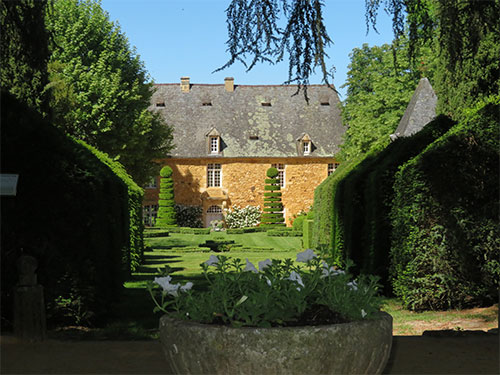
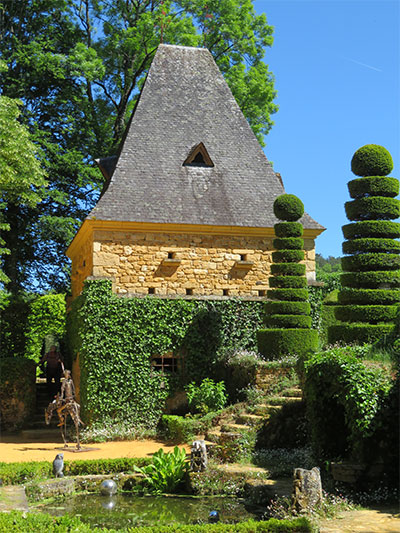
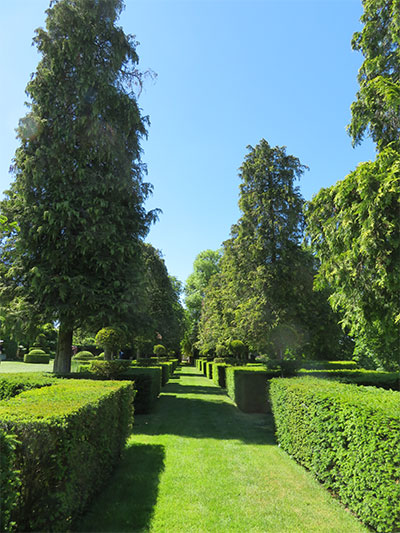
Along the way, separated by stone walls, and down stone steps, we discovered different themed garden areas, with an assortment of metal statues, ponds, brick buildings, and a dovecote. There wasn’t a lot in bloom, except for the white garden that had white roses. They had areas called the alley of charms, the alley of vases, the Chinese pagoda, the French garden, the fishpond, the vegetable garden, kitchen garden, olive tree garden, an enchanted terrace, pavilion de repos, a topiary farmyard, and the florist garden. There were four squares, the flower meadow, roaming square, inebriated square, and Daughters of the Wind square.
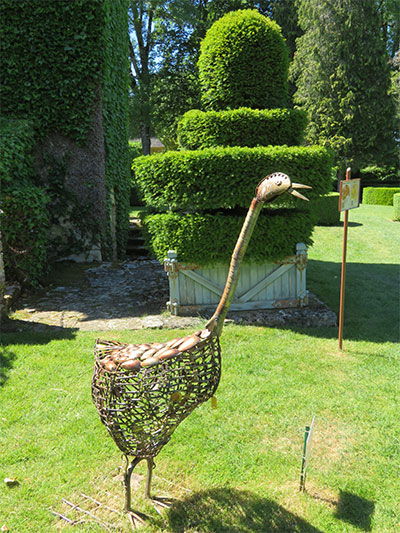
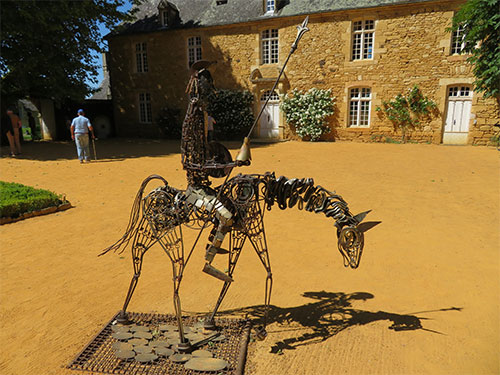
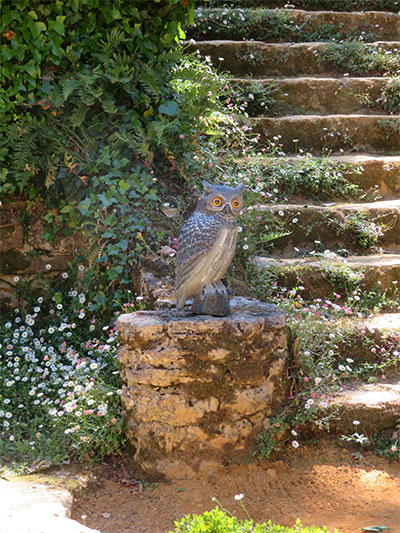
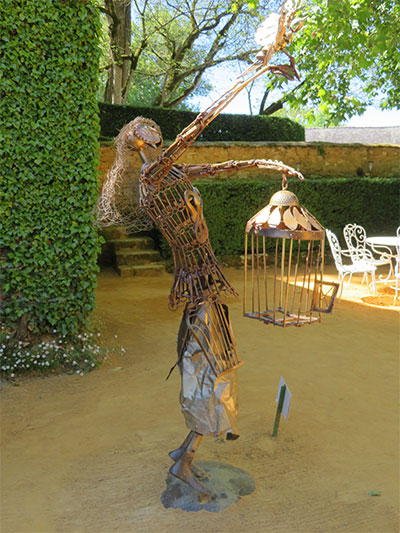
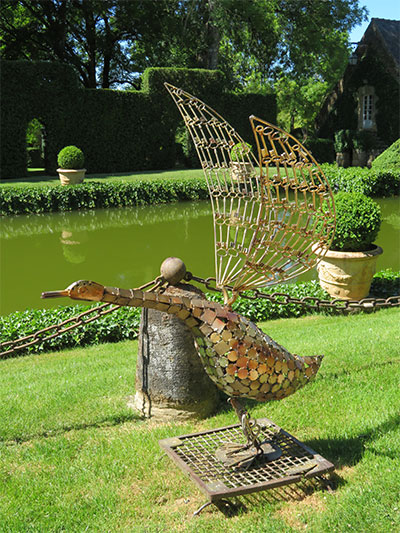
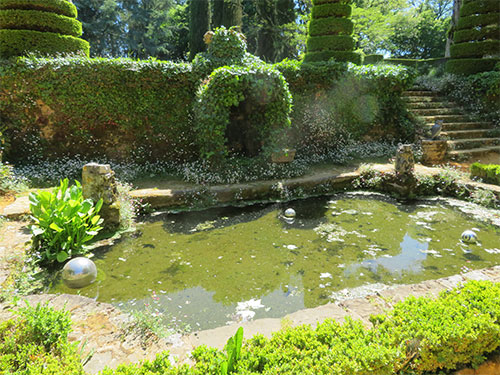
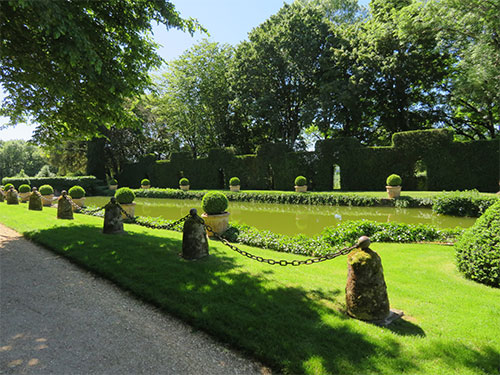
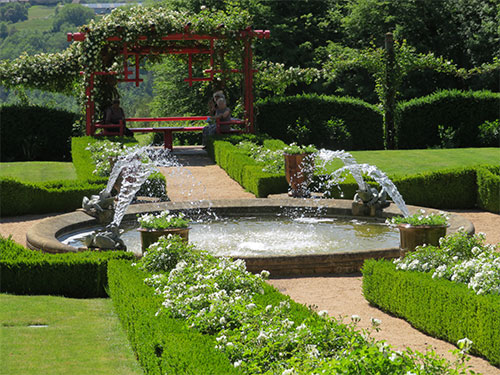
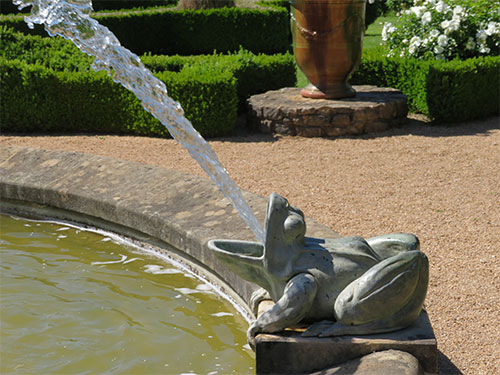
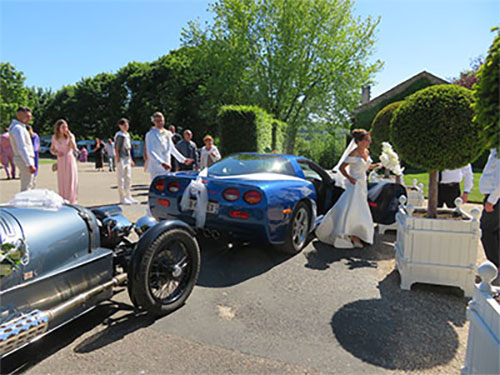
After we had visited the many gardens, and as we were leaving, a wedding party was arriving for their reception in one of the large rooms available for events. Both the bride and groom were dressed in white.
We made our way back to our B&B to relax, write, and eat. We set up our laptops and wrote for two hours, then set the table with Vere’s bread, cheese and foie gras sandwich, and I had some bread and cheese. Our hosts saw us and asked if we would like to have dinner on Sunday night with the other guests. The menu Valerie offered sounded great, so we said yes. Before dusk, we watched their donkey, let out to graze on the grass meadow in the back pasture.
 The official website of Lita-Luise Chappell, writer on sex, magic, food, distant lands, and everyday life with articles, poetry, novels, travelogues, rituals, cookbooks, and short-stories.