Wednesday, May 21
When breakfast was over, we drove north to see the Jardins de l’Imaginaire (Gardens of the Imagination). It is located northward in the town of Terrasson. The large gardens were begun in 1990 by a Franco-American landscape designer named Kathryn Gustafson. She wanted to show the domination of man over nature, utilizing a Roman presentation through a sacred forest with boxwood shrubs, which symbolize longevity and immortality. More than 1200 boxwoods were planted along pathways and surrounding flower beds.
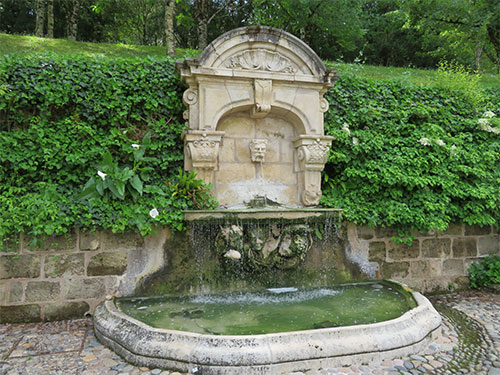
Gustafson also wanted to continue the ancient tradition of staying in contact with divinities of nature and the elements: of water and its movements; the wind and its ability to produce movement and sound, the stability of stone, the transformation of minerals, and the sight and smell of plants and flowers. The paths were always sinuous, providing a different perspective at every turn. The nearly fifteen-acre exhibits showed thirteen different tableaux with all of these aspects. One of the most picturesque settings and where we began, was a fountain at the base of the hill, from which one of five natural springs within the park gently splashed.
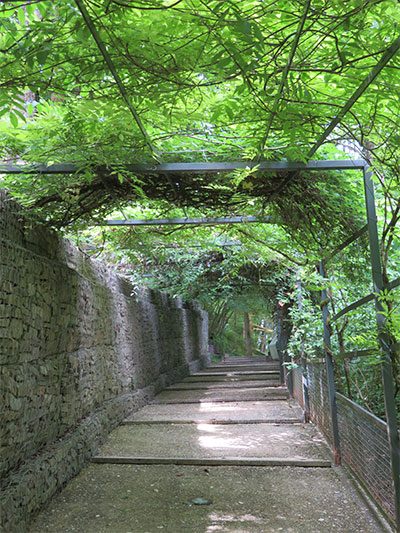
As we climbed up the hillside, to our right over the slope, we saw tall metal poles that had long aluminum wind blades, which shifted with the wind. Attached to them were bells, meant to ring with the wind. Since there was little to no wind, we never heard the bells ring.
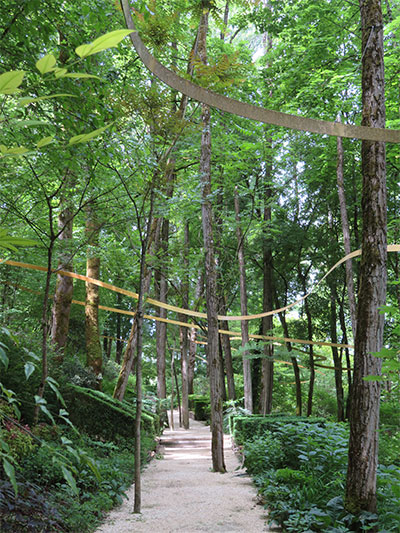
The path continued up, inspired by monasteries of the Middle Ages. A three-inch wide, golden metal band, representing Ariadne’s cord, wove through the tree branches.
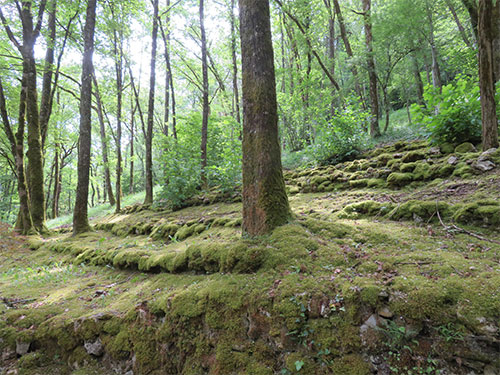
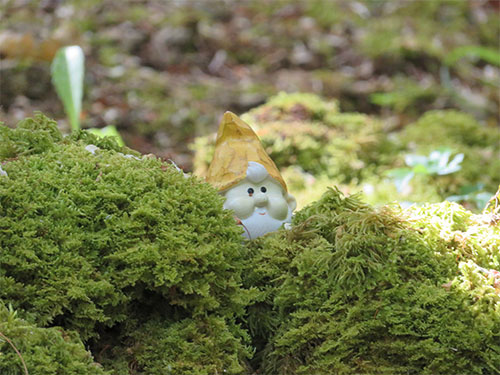
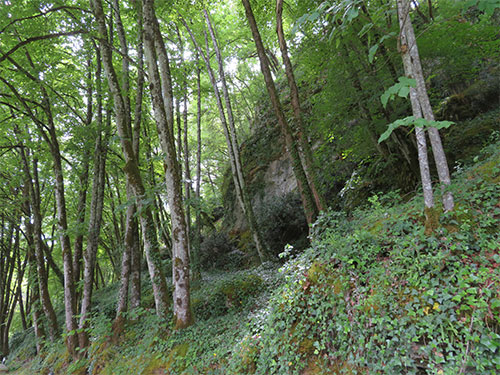
When we arrived at the top of the hillside, we found a terrace of dry-stone covered with moss and ivy. A sign informed us that moss was the most preferred habitation material for leprechauns, genies, elves, and fairies. In reality, it is believed that early man made his home in the caves in the upper hillside, above the park. Up until the late 1800s, the hill had been planted with grapes for making wine. During the Middle Ages, it was believed that wine loosened the tongue, and ivy restrained intoxication. Today, only ivy and moss cover this upper hill. We actually did see a few tiny plastic elves among the mossy folds.
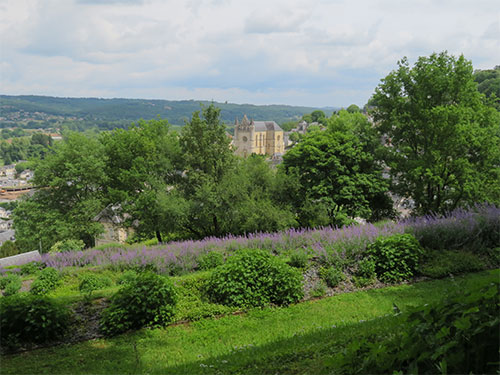
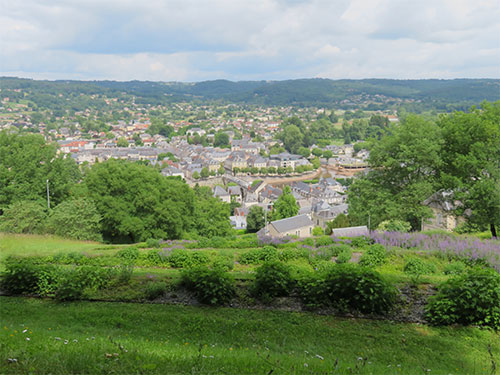
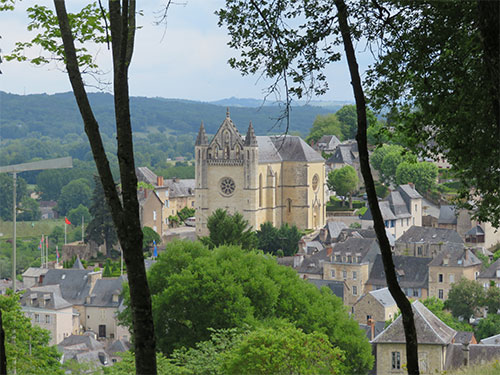
The path began to gently descend. As we rounded down to our right, below us to the left, we could see wooden benches of an outdoor theater. When past them, we came to a lookout point with cement benches, which offered excellent views of Terrasson and the Vézère River flowing through it. We swung our legs over and laid out our picnic lunch. It was so pleasant there. The sounds of the city were too far below us to hear. Instead, the sound of bird song was heard all around us; and small wispy clouds swept across a sunny blue sky before us. We also noticed that we were the only ones in the entire park. We looked right below us to a wide slope of lavender in bloom and to the right with a church on a hill. A leaflet from park headquarters at the bottom of the hill, said that the park would offer a shift in perspective. Sitting on that hillside, so enjoying those moments, we actually began to sense that.
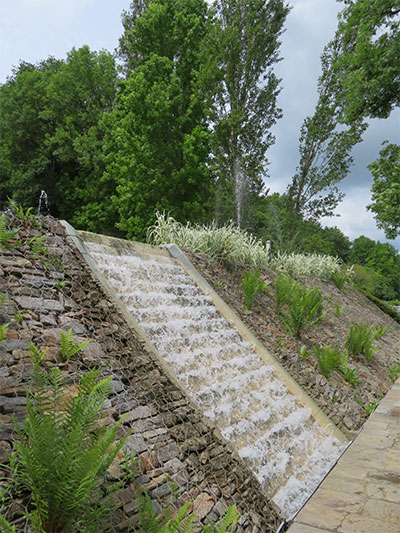
When we were done, we continued on the path that wound down toward our right to the water garden. All along the paths, signs stated which of the gardens we were entering, and in many places in-between, smaller signs presented famous sayings from different writers about flowers, plants, gardens, and trees. One example was by Gertrude Jekyll, “The love of gardening is a seed once sown that never dies.” Also, all along the different levels were cascading two-foot-wide places where water cascaded down, creating a delightful waterfall sound.
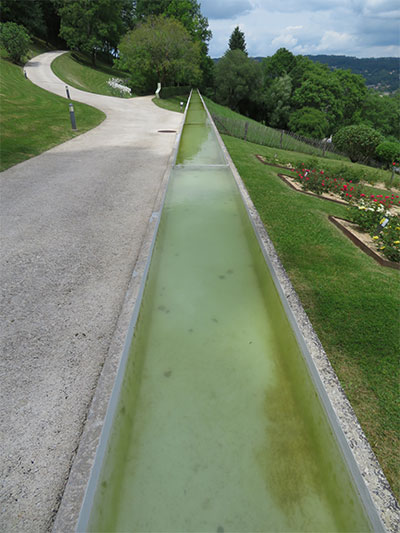
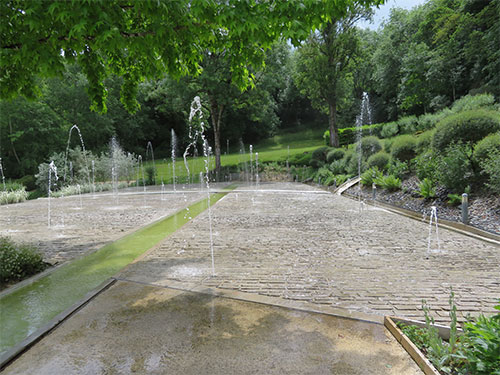
We came to a series of long and narrow metal boxes that channeled water from one to the other and took off in a direction down to our left, but we continued to the right, where spits of water shot up along the hillside. At the end of that path, was a pebble plateau with a series of dancing fountains that spurted upward. This display represents the bond uniting man and nature, where tiny droplets into the sky cross the light rays of the sun creating rainbows. It was delightful and there was room to walk between them and not get wet.
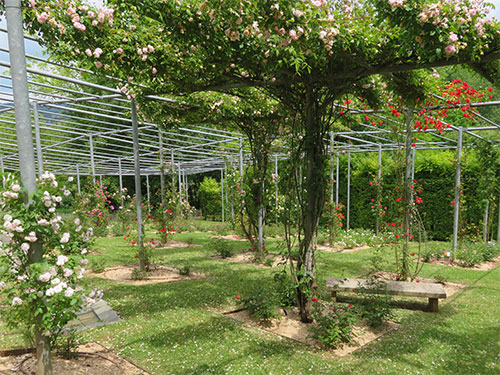
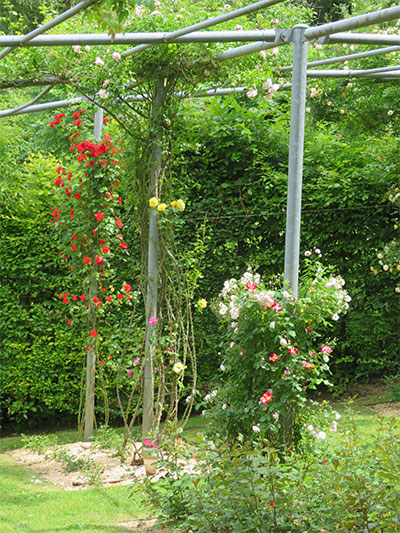
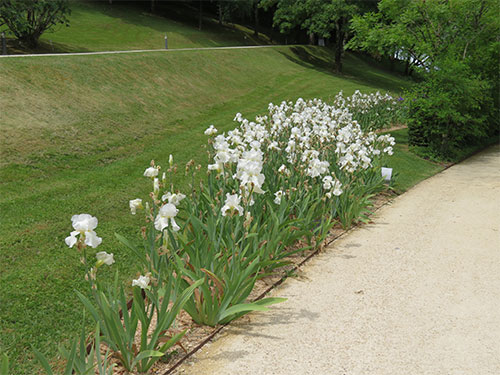
The path then wove to the left and entered the rose garden. Over 2,000 roses were identified, and pretty much all of them were in an array of different blooming colors from tiny white blooms and faint yellows, to the darkest of reds. Some roses were small bushes, but some stretched upward and continued to grow along the wires that spread out above them, portraying the suspended gardens in Damascus. The rose symbolizes romance, resurrection and immortality, red for love, pink for beauty and femininity. All along the different levels in this area, beds of purple and white irises were in bloom. Their white to blue colors, symbolizing the rainbow, linking heaven and earth, of gods and mankind.
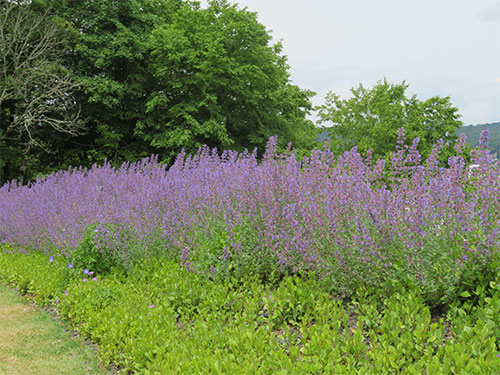
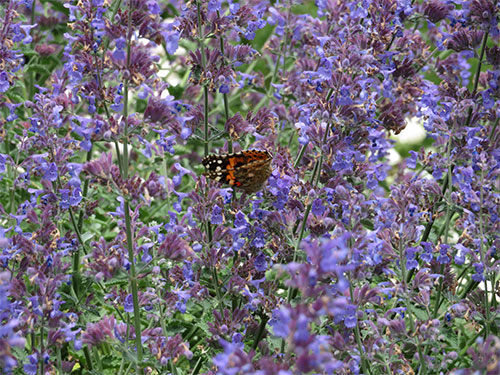
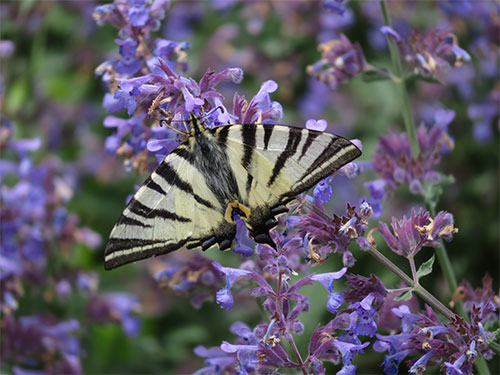
Further on, we came across a thick bed of purple flowers that had attracted bees and butterflies. It was enchanting, watching so many butterflies flitting along from stem to stem. It was difficult to capture a picture, they moved around so much, but Vere managed a couple of times to do so.
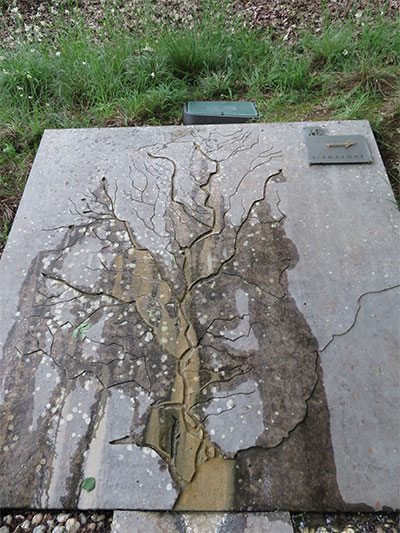
Next was a garden that showed the different major rivers of the earth and how they flowed. The rivers were: the Nile in Egypt, the Amazon in South America, the Mississippi in North America, the Ganges in India, and the Euphrates and Tigris Rivers in Western Asia. Plaques along the embankment for each country, had been laser cut, naming them, and showing how the rivers flowed in the grooves across that country. Then the water flowed down through them and into a trough that continued downhill. The best picture is of the Amazon. That particular pathway was lined with broken walnut shells, symbolizing protection, wisdom, fertility, and the endurance of life.
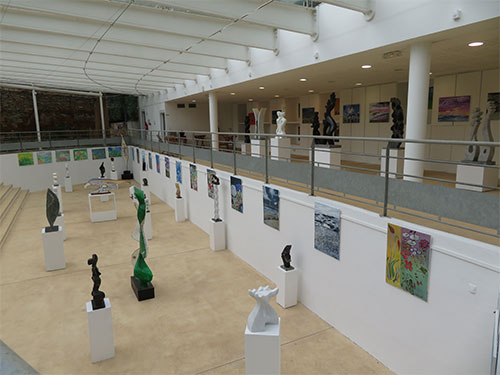
Next, was a path that led to a glass and rock conservatory, built by international architect, Ian Ritchie. It was built of gabion baskets, which are rock-filled metal cages, and is meant to show the harmony between the roughness of rock and the delicacy of glass. Seen from above, it simulates a reflecting pond of the sky. Within, was a modern art exhibition, with sculptures and art on display.
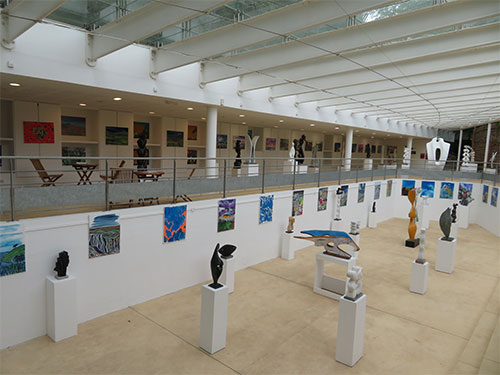
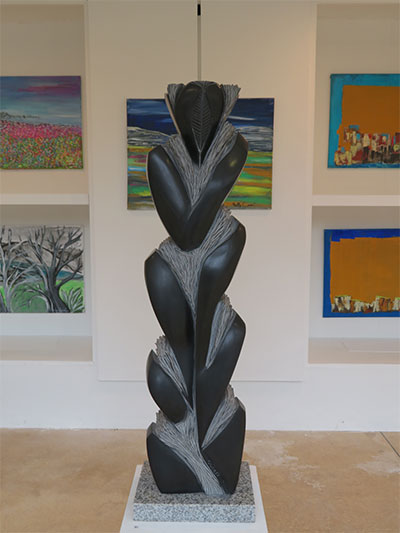
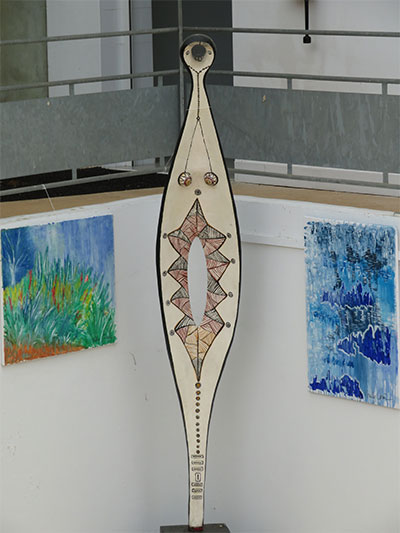
The last part of the park was a descending wide stairway with square cuts between the trees, each giving a windowed view of the hillside and town. A sign explained the windows: to the right was the past, to the left at the garden was the present, and the window ahead was the future.
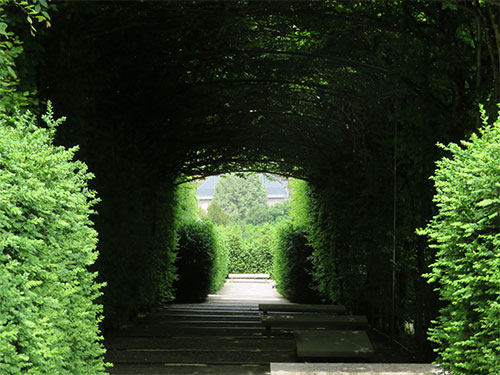
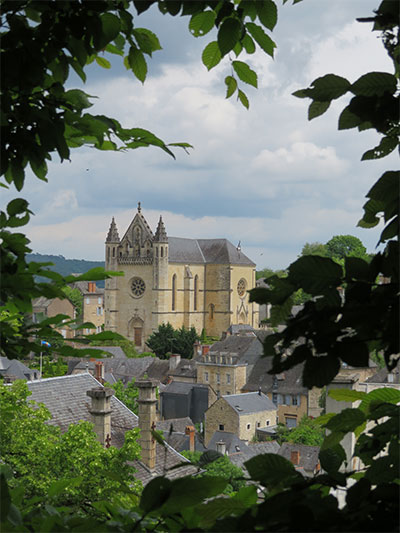
Now tired with spending a couple hours in the park, we slowly descended off the hillside, reflecting back on what we had seen. Aside from having the entire park to ourselves, we had enjoyed the peace, the beauty and the sounds of the woods and water. We really enjoyed the enchanting experience leaving us inspired.
We headed back to the B&B to rest before dinner in old Sarlat, at Restaurant Le Bistro. We were there yesterday but had not had enough time to look around, so we took the time and did more peering in shop windows. We walked into the restaurant and got a table in a back corner of a quickly filling popular restaurant. We ordered two glasses of Monbazillac wine from the Sauternes area. We shared a good bowl of French onion soup. Then Vere had the night’s special, of guinea fowl with morel mushrooms, garlic mashed potatoes, and a side of grated zucchini and carrot, held in a thin pastry cup. I had the trout with the same side dishes. I was surprised when my fish came, as the menu had said trout, but it looked very pink and tasted exactly like salmon. Come to find out it really was trout, but a dark pink-flesh variety. Vere had a dessert of a bread pudding-like dessert with caramel sauce, that came with a filigree-like veined-leaf cookie.
It was raining lightly when we left, so our umbrellas went up and we had a quiet evening at the B&B.
 The official website of Lita-Luise Chappell, writer on sex, magic, food, distant lands, and everyday life with articles, poetry, novels, travelogues, rituals, cookbooks, and short-stories.